
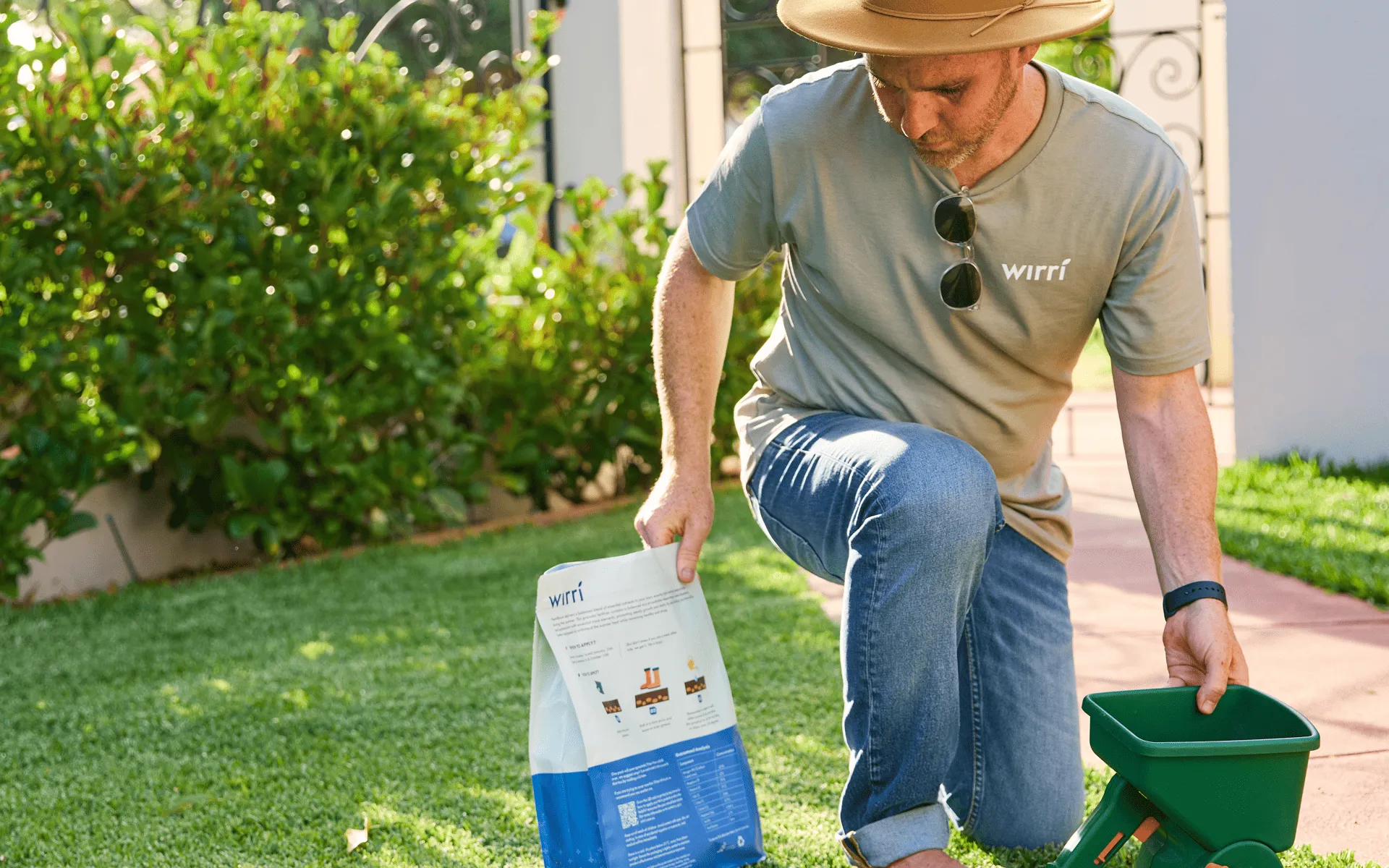
Spring is the season your lawn shifts from survival to growth. Soil warms, daylight stretches, and turf wakes up hungry. The fertiliser choices you make over the next eight to ten weeks will shape colour, density, and resilience right through summer. So, read on for ideal Spring lawn care solutions regarding fertilisers.
Why Fertiliser Matters in Spring
When winter slows growth, turf tissues become thin and roots stall. As temperatures rise, lawns need a steady supply of nutrients to rebuild roots, thicken coverage, and outcompete weeds. Fertiliser provides that supply.
Done well, it turns a patchy winter lawn into a thick, even sward. Done poorly, it creates growth spurts, scalping, and stress. The goal in spring lawn care is not just fast green. It is controlled, sustained growth that holds up when summer heat arrives.
The Nutrient Basics: What N, P, K And Micros Actually Do
Fertilisers list three headline nutrients: nitrogen, phosphorus, and potassium. Each has a distinct job.
- Nitrogen drives leaf growth and chlorophyll. It is your greening engine. Too much, too quickly, leads to soft growth and frequent mowing.
- Phosphorus supports root development and early plant energy systems. Only apply if your soil or product label indicates a need, since many Australian soils already carry enough for established turf.
- Potassium strengthens cell walls and improves tolerance to heat, drought, and wear. It is a spring essential because it prepares the lawn for the months ahead.
Micronutrients like iron, manganese, and magnesium support enzyme activity and chlorophyll formation. Iron, in particular, delivers a deep green without pushing excessive growth, which is useful when you want colour without constant mowing.
Release Profiles: Quick, Slow, And Controlled
Spring success hinges on release profile. That is how quickly nutrients become available in the soil.
- Quick release fertilisers give fast colour within a few days. They are great for an immediate lift but can cause growth spikes, leaching, and burn if overapplied.
- Slow release fertilisers coat or stabilise nitrogen so it feeds over six to ten weeks. This suits spring lawn care because it smooths growth, reduces surge risks, and keeps colour consistent.
- Controlled release technologies tailor the release to soil temperature and moisture. As spring warms, they deliver more nutrition at the moment the lawn can use it.
For most home lawns, a slow or controlled release base in early spring is the backbone. If you want an extra visual kick, layer a light foliar quick release a few weeks later.
Granular Versus Liquid: Which To Choose and When
Both formats have a place.
- Granular fertilisers are easy to spread and ideal for the base feed that powers the season. They are watered in and continue working in the root zone.
- Liquid fertilisers and foliar feeds act faster and allow fine-tuning. They suit mid-spring touch ups, colour corrections with iron, or targeted responses to minor deficiencies.
If you are new to lawn care, start with a quality granular slow release in early spring. Add liquids later for adjustments rather than making liquids your only plan.
Timing: Soil Temperature and the First Spring Feed

Grass responds to soil temperature more than calendar dates. Warm season lawns like buffalo, couch, kikuyu, and zoysia wake properly once soil sits above roughly 16 to 18 degrees. That is your signal to make the first base application. If you feed too early, you risk wasting nutrients to rain and minimal uptake. If you feed too late, you miss prime recovery time.
A simple rule for spring lawn care: first slow release when the lawn starts growing noticeably, then reassess four to six weeks later for a light top-up or a quick foliar pass.
Matching Fertiliser to Grass Type
Different grasses handle nitrogen and growth rates differently. Matching product and rate to turf type avoids headaches.
- Buffalo prefers moderate nitrogen. Too much can cause thatch and scalping. Use a balanced slow release with good potassium and consider iron for colour without pushing height.
- Couch tolerates and uses higher nitrogen well, especially if you mow frequently. Blend slow release with occasional light foliar feeds for tournament-style density.
- Kikuyu is vigorous by nature. Keep nitrogen modest and lean on potassium to build toughness. Overfeeding leads to rapid thatch.
- Zoysia grows slower. Prioritise controlled release and iron to avoid forcing lanky growth. Patience pays off with a tight, carpeted look.
Soil pH, Organic Matter, And Why Fertiliser Alone Is Not Enough
Fertilisers work best in the right soil context. If your soil is acidic or hydrophobic, or if organic matter is low, nutrient efficiency drops.
- pH controls nutrient availability. Most turf thrives around pH 6 to 7.5. If pH is far off, consider lime or other amendments based on a soil test rather than blindly increasing fertiliser.
- Organic matter improves nutrient holding capacity and moisture retention. A light compost topdress in thin areas pairs well with a slow release feed.
- Hydrophobic sands are common in parts of Australia. Use a wetting agent so water and nutrients reach the roots evenly.
These supporting actions unlock more value from every dollar you spend on fertiliser during spring lawn care.
Building a Simple Spring Fertiliser Program
You do not need a complicated calendar. Keep it steady and predictable.
- Early spring: Apply a quality slow release or controlled release granular with moderate nitrogen and solid potassium. Water in well.
- Two to three weeks later: If colour lags or you want a boost, spray a light liquid feed with iron. Keep rates modest.
- Mid spring: Reassess density and colour. If growth is even and coverage is closing, stay the course. If areas are thin, combine a light compost topdress with a small granular top-up.
- Late spring: Use iron again for colour. If lawn is surging, skip nitrogen and rely on mowing discipline. As weather warms, prepare to switch from feeding to maintenance.
This sequence gives you early momentum without forcing unsustainable growth.
How Much to Apply: Rate, Spread, And Water-In
More is not better. Follow label rates and consider your mower schedule. A heavy dump of nitrogen will push blades faster than roots, which leads to scalping and opens the canopy for weeds.
- Calibrate your spreader. Even coverage matters more than chasing the last gram.
- Overlap passes slightly to avoid stripes.
- Always water in granular fertiliser within the timeframe on the label. For most products that means the same day.
Consistency beats intensity every time in spring lawn care.
Liquids And Foliar Feeding: Smart Uses, Not Shortcuts

Liquids shine for quick fixes and targeted outcomes. Use them to:
- Add iron for deeper green without height spikes.
- Correct minor deficiencies in magnesium or manganese.
- Support recovery after heavy traffic, disease, or an unexpected cold snap.
Avoid stacking multiple liquids on the same day, especially if you are also spot spraying weeds. Spread tasks out so the plant can respond.
Final Takeaway
Fertiliser is not about dumping nutrients and hoping for the best. It is about supplying the right nutrients, at the right rate, with the right release profile, and timing it to active growth. Pair a quality slow or controlled release base with occasional liquid adjustments, keep mowing and watering disciplined, and you will turn winter’s thin patches into a dense, resilient lawn.
When you approach fertiliser as the engine of spring lawn care rather than a one-off event, the results compound week after week and carry through to summer without the usual stress and surge.