

Autumn is when a lot of lawns stop responding well to the same approach that carried them through the hotter months. Summer tends to chew through stored nutrients, stress the root zone, and leave turf looking thinner, paler, or more uneven than it did at the start of the season.
Good Australian lawn care pays close attention to that shift. Rather than chasing a fast green-up, autumn feeding works best when it focuses on the nutrients that help a lawn recover, toughen up, and hold together as cooler weather moves in.
Nitrogen Still Matters, but Not in the Same Way
Nitrogen gets most of the attention in lawn care because it drives green colour and active growth. Autumn does not change that completely, but it does change how nitrogen should be used.
At this time of year, moderate nitrogen usually makes more sense than a big, aggressive hit. The lawn still needs support for leaf health and ongoing growth, especially if summer has left it looking tired. Too much nitrogen, though, can push lush growth that is softer than ideal for the season. That kind of response can look good briefly, but it is not always the strongest base for the cooler months ahead.
Potassium Often Deserves Top Billing in Autumn
If one nutrient tends to earn more respect in autumn, it is potassium. This is where the seasonal priorities really become obvious.
Potassium supports overall plant strength and helps the lawn cope better with stress. After summer, that is a big deal. Turf that has spent months dealing with heat, wear, and uneven moisture usually benefits from a feed that is less focused on pushing growth and more focused on helping the plant hold itself together.

Iron Helps Colour Without Forcing a Growth Surge
Plenty of lawn owners want colour improvement in autumn, especially if the turf has gone pale after summer. Iron is useful here because it can lift the look of the lawn without relying on a big nitrogen push.
That makes iron especially handy when the turf needs tidying up visually but does not need to be driven hard. A lawn that looks washed out can often benefit from iron as part of a broader autumn program, particularly when it is paired with moderate nitrogen rather than used as a stand-alone fix.
What to Look for on the Label
Walking into a garden centre can make autumn feeding seem more complicated than it really is. Plenty of products promise fast results, deep colour, or all-season performance. The better question is whether the nutrient profile actually suits autumn.
A useful autumn fertiliser blend usually points in a few specific directions:
- Moderate nitrogen rather than a hard spring-style push
- Potassium with a stronger role in the mix
- Iron or similar support for colour if the lawn has gone pale
- Some slow-release component if you want steadier feeding
- Soil-support inputs if the lawn is dry, tired, or struggling to bounce back
Granular and Liquid Nutrition Each Do a Different Job
Autumn is one of the easiest seasons to see why granular and liquid products are not direct substitutes for each other. Both have value, but they deliver that value in different ways.
A simple way to think about the split is this:
- Granular products help build the base
- Liquid products help fine-tune colour and uptake
- Soil-support products help the rest of the program perform better
Used together, those categories often deliver a stronger autumn result than relying on any one of them alone.
Common Nutrient Mistakes in Autumn
A lot of autumn lawn disappointment comes from choosing the wrong priority rather than the wrong product category.
Several mistakes show up repeatedly:
- Chasing the greenest possible response instead of stronger turf
- Applying too much nitrogen for the season
- Ignoring potassium and overall resilience
- Skipping soil support on dry or hydrophobic lawns
- Expecting one product to fix every issue
- Leaving feeding too late in the season
Each of those mistakes pulls the program away from what autumn is actually good for. The season rewards steady recovery far more than showy, short-term results.
A Simple Autumn Nutrient Plan That Makes Sense
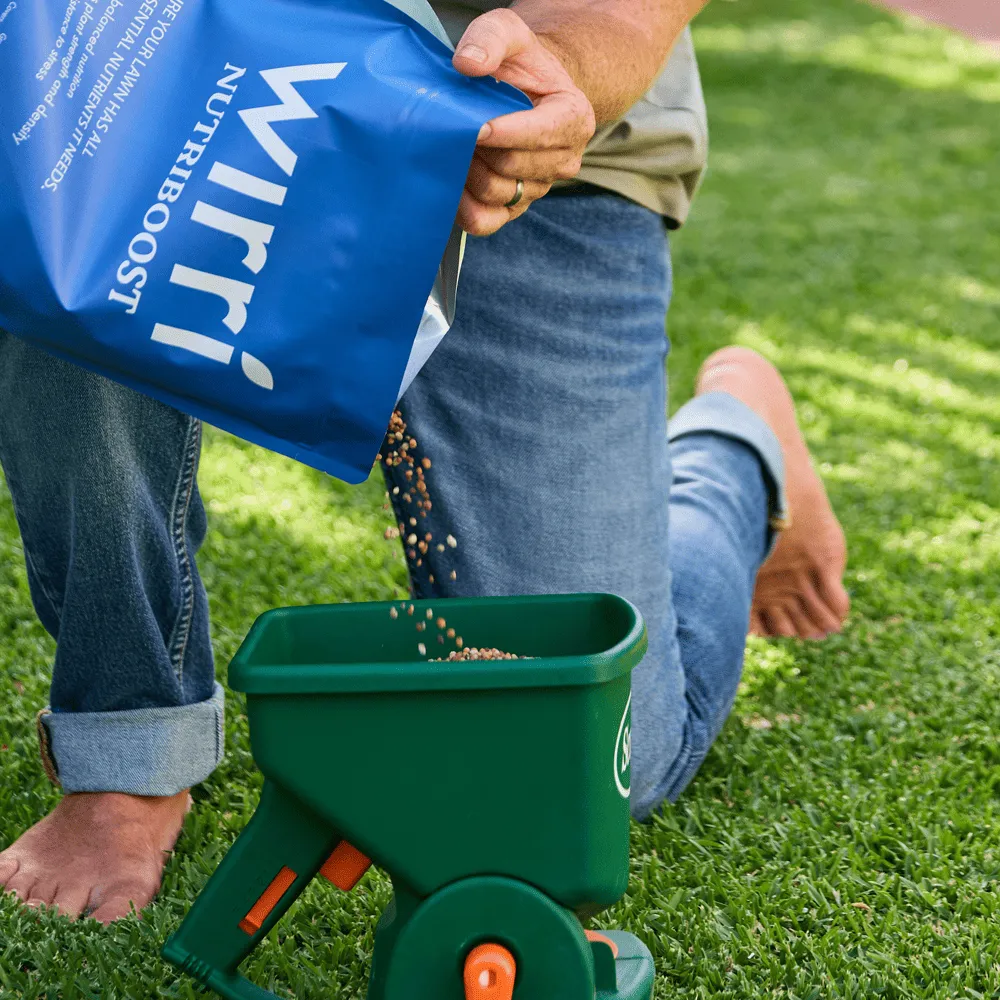
Autumn lawn care gets easier once the nutrient roles are separated out. You do not need a complicated system, but you do need the mix to match the season.
A practical autumn plan often includes:
- A soil-support product to improve condition and moisture handling
- A potassium-forward granular fertiliser as the base feed
- Moderate nitrogen rather than an aggressive growth push
- Iron and trace elements if colour needs lifting
- One or two follow-up applications spaced through the season
That approach suits the way many lawns behave after summer. Growth is still there, but the focus has shifted. Good Australian lawn care in autumn is less about forcing a response and more about giving the turf what it needs to recover properly.
Final Thoughts
The lawn nutrients that matter most in autumn are the ones that support recovery, strength, and season-appropriate growth. Nitrogen still has a place, but it should not dominate the program. Potassium does a lot of the hard work when the goal is resilience. Iron and trace elements help improve presentation without leaning too heavily on soft growth. Soil conditioners and humic inputs help the rest of the program perform better.
Taken together, that gives autumn feeding a different shape from the warmer months. Instead of chasing a quick cosmetic lift, the smarter move is to feed for stability and recovery. For anyone serious about Australian lawn care, that shift in nutrient focus is one of the more useful changes you can make after summer.