Choosing the right T-slot aluminium extrusion matters because one profile decision sets a frame’s stiffness, hardware supply, compliance standing and working life. Most of the cost of getting it wrong arrives months after delivery.
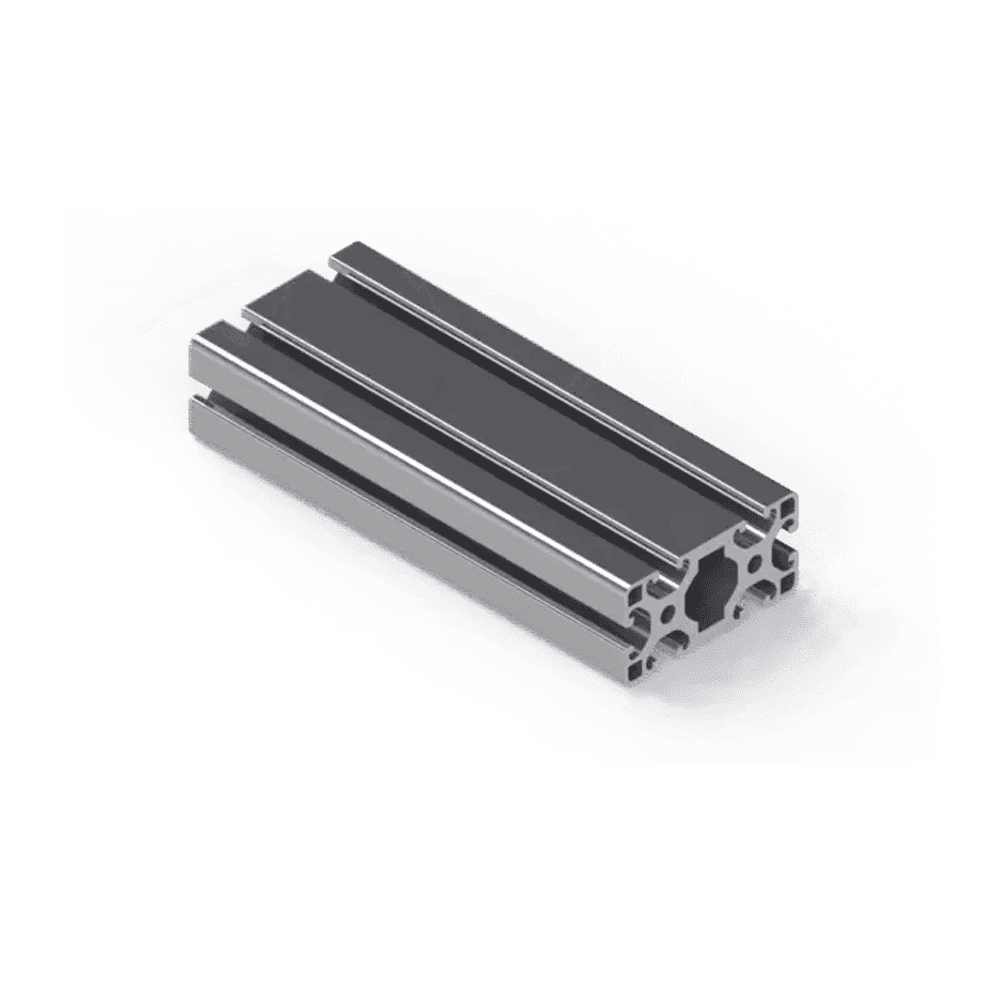
A T-slot aluminium extrusion is a profile made by forcing aluminium through a shaped die, so every face carries a T-shaped channel. T-nuts slot into those channels, which means accessories, guard panels and mounting plates can be fixed at any point along the profile without welding.
What Makes a T-Slot Profile the Right Choice
A T-slot profile is the right choice when it meets its stiffness target over the longest span and takes hardware that’s easy to buy locally. It also needs a finish that suits the site.
- Stiffness over the longest unsupported span, often judged against a span/500 limit (4mm of sag across a 2000mm rail).
- Orientation on rectangular sections, as an 80×40 on its edge resists vertical load far better than one lying flat.
- A slot and T-nut pattern that local suppliers keep in stock.
- A finish matched to the exposure on site.
Span has the biggest influence. Sag rises with the cube of the span under a centre load. A rail that’s 25 per cent longer sags about twice as much, roughly what happens when a 1200mm bench span stretches to 1500mm.
The Real Cost of a Poor Profile Choice
Most of the money lost on a poor profile choice goes on labour, replacement hardware and downtime. The extrusion itself is often among the cheaper line items.
- Rework labour, which can run across several days on a guarded automation cell.
- Brackets and fasteners that won’t fit if the replacement profile uses a different slot.
- Lost production while the line waits on parts and a rebuild.
Within the 40×40 size, thicker-walled sections gain stiffness without changing the frame’s outside dimensions. Many share a slot with the standard section, though that’s something to check before ordering. A move to a different size usually means new brackets, and the old ones get binned.
Infill panels add a further cost. Once frame dimensions shift by a few millimetres, every polycarbonate sheet needs recutting.
Why the Slot Shape Decides Future Hardware
The slot shape decides future hardware because T-nuts and brackets have to match the slot to fit properly. Two profiles with the same outside dimensions can still need completely different parts.
- Slot width and internal shape vary between manufacturers, even on profiles of the same nominal size.
- Some systems accept drop-in T-nuts that go in mid-frame, while others only take nuts slid in from an open end.
- Bracket ranges and local stock levels differ, which matters more than catalogue size when a part’s needed tomorrow.
A hypothetical packing line shows the risk. Its guard frame uses an imported profile with an unusual slot, and two years later a new sensor bracket needs a T-nut. The nearest compatible stock is six weeks away by sea freight. The line runs on cable ties in the meantime, which nobody’s proud of.
Sites that run one system across every frame can share spares between them. Mixed sites tend to end up with a spares room full of near-identical corner brackets, which is a slow-motion headache.
How Frame Stiffness Affects Guarding Compliance
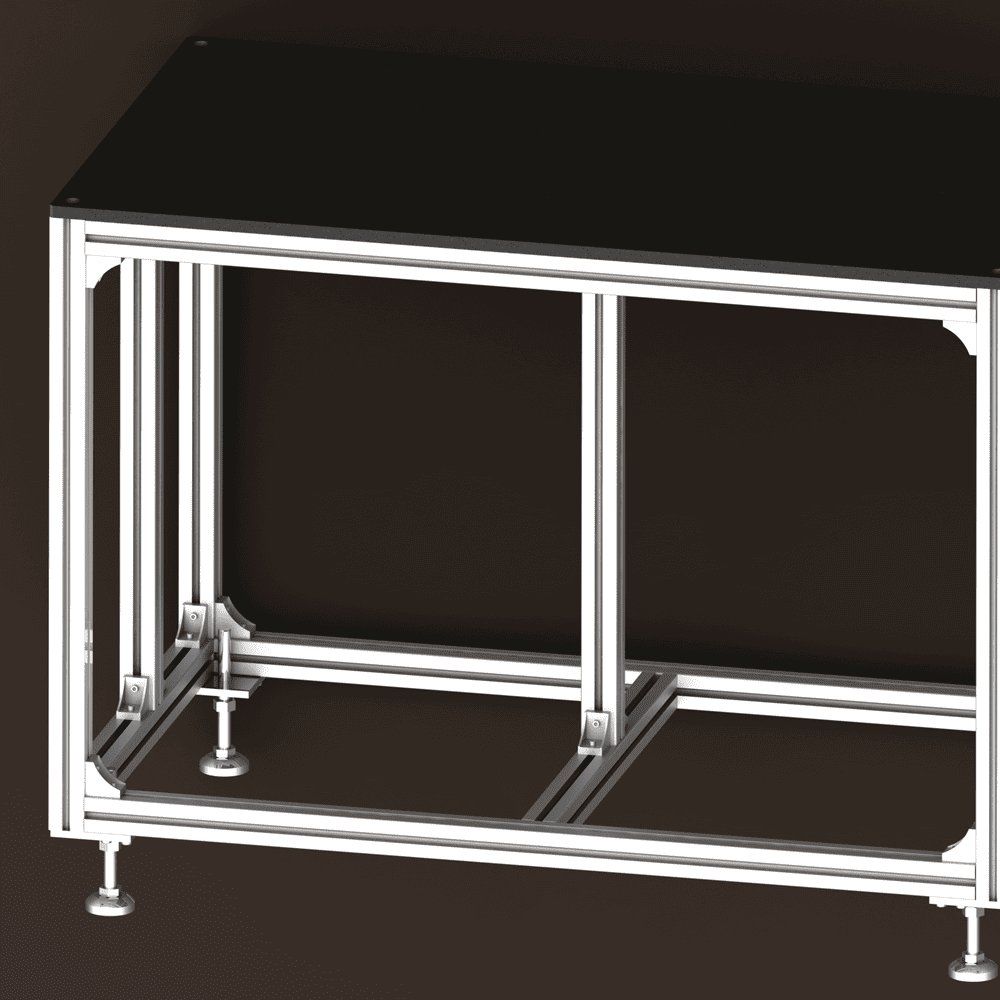
Guard frames built from too light a profile can drift out of AS/NZS 4024 limits through ordinary flex. That’s because the standard ties allowable opening sizes to how far an opening sits from the hazard.
- A panel that bows under a lean can widen a gap past the size allowed at that distance.
- Fixed guard panels are generally expected to stay put until someone takes a tool to them, so quick-release clamps don’t suit those panels.
- Interlocked doors depend on a square, stable frame for the actuator to line up each cycle.
- Long guard runs need posts stiff enough to shrug off a pallet jack bump.
In Western Australia, the duty sits under the Work Health and Safety Act 2020 and the Work Health and Safety (General) Regulations 2022. Other states and territories run equivalent laws.
Frequently Asked Questions
What Happens When the Wrong T-Slot Profile Gets Installed?
The usual result is a frame that flexes or loosens in service, followed by rework. Guard doors start dragging on their stops, and sensors drift off target. Replacing the profile often means replacing the brackets and panels with it.
Can T-Slot Hardware from One Brand Fit Another Brand’s Profile?
Sometimes, though it’s a gamble. Profiles with matching outside dimensions can still have different slot widths and internal shapes. Checking the series and slot spec before ordering avoids most mismatches.
Which Finish Suits T-Slot Frames Near the Coast?
Anodised and powder-coated profiles can both suit a coastal frame, provided the fasteners are isolated from the aluminium. Anodising is harder and less likely to chip at T-nut seats, which helps on frames that get reconfigured. Coating specs vary by supplier, so they’re worth confirming at quote stage.
Key Takeaways
Choosing the right T-slot aluminium extrusion is important because the profile fixes a frame’s stiffness, parts supply, compliance standing and service life at once. Correcting any of those later costs far more than choosing well at the start.
- Span and orientation drive stiffness, which drops sharply as span increases.
- The slot shape decides which hardware will fit the frame.
- Guard frames need to hold the opening limits in AS/NZS 4024, the standard most often used to meet WHS guarding duties.
- Coastal frames need dissimilar metals kept apart.
- Precision equipment shows up frame flex long before the frame looks strained.
None of this is glamorous. It’s just cheaper than building the frame twice.