
Aluminium extrusion is one of those product forms most people see all the time without realising it. It often appears as a neat edge, a frame member, a channel, a rail, or a joining section that helps a product fit together cleanly. Once you know what to look for, aluminium extrusion becomes much easier to spot in everyday items and commercial fit-outs.
Why These Profile Types Turn up So Often
The most common aluminium extrusion profiles keep appearing because they solve repeatable design problems. Products often need edges, channels, supports, joiners, and trims, and profile-based sections are a practical way to build those functions into one piece.
That is why the same general profile families can be found across very different product categories.
You will often see repeat use because these profile types help with:
- Framing and edge definition
- Panel holding and guiding
- Joining or separating sections
- Creating rails or tracks
- Protecting corners and edges
- Keeping a neat and consistent finish
Once you start looking at extrusions by job type, the pattern becomes very easy to see.
Angle Profiles and Corner Sections
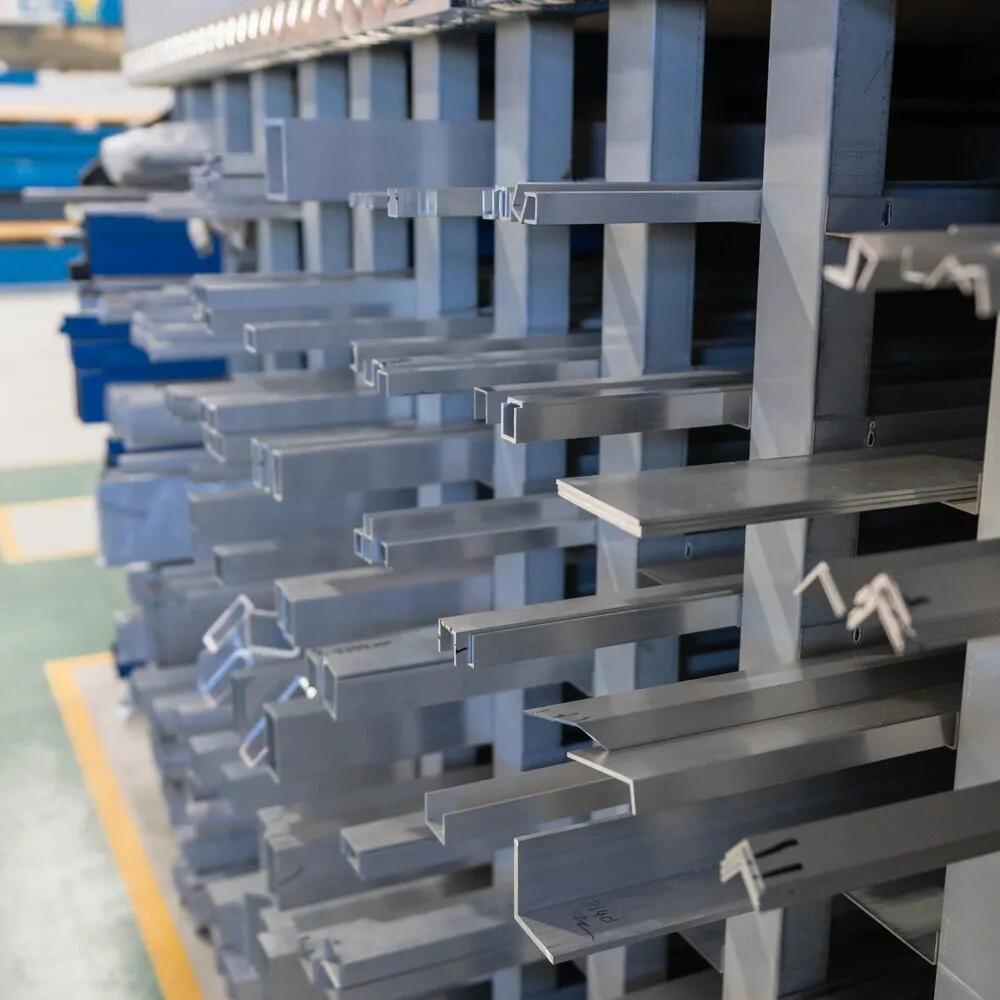
Angle profiles are among the most recognisable aluminium extrusion shapes. They are commonly used where a clean corner, edge reinforcement, or trim detail is needed. In many cases, people will have seen them on shelving, cabinet edges, frames, display units, and general fabricated assemblies.
A simple angle profile can look modest, but it is very useful because it works well at corners and along edges where two surfaces meet.
Common ways angle profiles are used include:
- Edge trims on panels and boards
- Corner framing sections
- Protective edge finishing
- Mounting and support brackets in fabricated builds
- Joinery and display details
You have probably seen angle extrusions in places where the finish looks tidy and the corner line looks deliberate rather than improvised.
Channel Profiles and U-Sections
Channel profiles are another very common aluminium extrusion type. These profiles are often used to hold, guide, or frame another material, such as a panel, sheet, insert, or cover. They are easy to recognise because they create a space or slot that runs along the length.
This is one of the most practical profile families because a channel can act as both structure and locating feature at the same time.
Channel-style extrusions are often used in applications such as:
- Panel surrounds and edge channels
- Tracks for sliding components
- Trim sections with insert space
- Framing systems for partitions or displays
- Covers and housings with removable panels
If you have ever seen a section that neatly receives another piece and keeps it aligned, there is a good chance it was a channel-style aluminium extrusion.
T-Sections and Joining Profiles
T-sections are common where a profile needs to divide spaces, support edges, or create a joining line between surfaces. The shape makes them useful for transitions and support points, especially in assembled products and fit-out work.
They often appear in products where multiple panels or surfaces need a consistent line between them. In many cases, a T-profile does both the joining job and the finishing job in one section.
Flat Bars and Flat Strip Profiles
Flat profile extrusions are easy to overlook because they appear simple, but they are extremely common. A flat strip or flat bar profile is often used when a project needs a straight, clean section for mounting, edging, spacing, or finishing.
In many products, these profiles are used in combination with more complex sections. They can support layout, add finishing detail, or act as a backing or cover piece.
Round, Square, and Rectangular Hollow Profiles
Many people associate aluminium extrusion with specialised channels and trims, but hollow profiles are also very familiar. Round, square, and rectangular hollow sections are often used where the build needs a clean linear member with an internal void.
These profile types show up in furniture, frames, guards, supports, racks, and equipment structures. In many everyday products, the hollow form helps create a neat section that is easy to integrate into a larger assembly.
Round Rod and Solid Profiles
Solid profiles also deserve a place in this list because they appear in many fabricated products, fittings, and support pieces. While they may look more straightforward than channels or trims, they are still part of the broader aluminium extrusion family in many applications.
These profiles are often selected when a build needs simple geometry, a clean finish, and a section that can be cut and integrated into a system.
Trim Profiles and Edge Finishing Sections
Trim profiles are some of the most visible examples of aluminium extrusion because they are designed to be seen. They are commonly used to finish exposed edges, improve the look of joins, and create clean transitions between materials.
These profiles come in many shapes, and some are standard while others are custom to match a particular product system. What they share is a focus on edge treatment and a neat finish.

Track and Rail Profiles
Track and rail profiles are common in products that move, slide, guide, or align components. These can look simple from the outside, but the cross-section is often designed carefully so another part can sit, slide, or locate correctly.
This is a great example of why aluminium extrusion appears in so many products. The profile can carry a very specific function along the full length.
Key Takeaways
Common aluminium extrusion profile types are easy to miss until you know what to look for. Once you start recognising angles, channels, T-sections, trims, rails, hollow sections, and modular profiles, you can see how often aluminium extrusion is used to support fit, assembly, and finishing in everyday products.