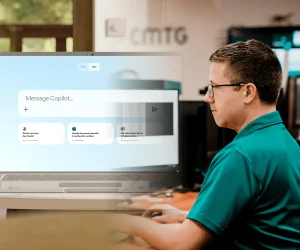

Customer shortlisting has moved somewhere suppliers can’t see it. For buyers who start with an AI tool, the serious options are often settled before a single provider gets a phone call. It’s one of the quieter shifts AI and marketing have brought to considered purchases.
Shortlisting is the stage where a buyer trims a broad field of possible suppliers down to a handful worth talking to. It sits after the buyer recognises a need and before any quoting or formal comparison begins.
Most businesses still assume the shortlist takes shape during the first sales call. The common line in the trade is that a good first meeting wins work. It depends on getting the meeting, which is less certain than it used to be.
How AI Has Changed Where Shortlists Form
Shortlists now often form inside a conversation between a buyer and an AI tool, before any supplier hears about the job. The buyer describes the situation and asks which businesses fit. Those prompts usually carry far more detail than a search query ever did:
- the size of the buyer’s business and the problem it’s facing
- what’s already been tried and why it fell short
- a rough budget
- specific worries, such as contract length or how responsive a supplier is likely to be
Each of those details works as a filter. A suburban accounting firm and a national one can look much the same in a keyword search. A prompt mentioning a 12-person team and a tight budget can sort them quickly, provided each firm says publicly who it works with.
Buyers were already doing most of their homework alone. A widely quoted figure from before generative AI took off put supplier meetings at around 17% of total buying time on complex B2B purchases. That small window was split across every vendor in the running.
Most of the remaining time went on independent research and internal discussion. Much of that research now runs through AI assistants, and that’s where many shortlists take shape.
When the AI Sets the Selection Criteria
AI tools often hand buyers a way to judge providers along with the answer, and that framework can quietly become the shortlist’s entry test. A business that doesn’t visibly meet the criteria can get cut before anyone checks whether it actually does.
A useful hypothetical: a Brisbane manufacturer asks an AI assistant how to choose an enterprise resource planning (ERP) implementation partner. The answer suggests looking for local support staff and fixed-fee pricing. Two capable firms offer both, but only one says so on its website.
The other firm drops out before the buyer makes a single call, and its pipeline shows no clear sign of the loss.
Pricing models and contract terms have traditionally been left for the sales call. When AI tools are doing the first sort, anything a buyer is likely to screen on needs stating plainly in public. Minimum engagement sizes, service areas and typical response times belong in that bucket too.
Why Being Left Off Is Hard to Spot
Missing an AI-generated shortlist rarely leaves a clear trace, because the buyer usually moves on without making contact. There’s no lost tender to review and no rejection email to learn from. The clues tend to be indirect:
- cold enquiries slowing while referral work holds steady
- new prospects arriving with a competitor’s name already in mind
- questions about services the business no longer offers, which can point to old content still circulating online
- a busy sector sitting alongside a quiet pipeline
None of these proves anything on its own. Most operators reckon a slow quarter has plenty of possible causes, so these signs are simply a reason to have a proper look.
Frequently Asked Questions
Can a Business Ask an AI Tool to Correct Wrong Information?
Correcting an AI assistant in one chat doesn’t usually change what it tells other users. Its answers come from the material it can draw on, so the fix sits with the website, listings and other sources. Updates can take a while to show up as tools refresh.
How Can a Business Check Whether AI Tools Recommend It?
Running realistic buyer prompts through a few AI assistants gives a rough picture. Results vary between tools and between sessions, so a single test isn’t conclusive. Asking separately which selection criteria matter adds a second layer, showing where the business might fall short.
How Often Should a Business Check Its AI Visibility?
A full audit each quarter suits most businesses, with a quick spot check of one or two prompts each month in between. The monthly check catches shifts as AI tools update. It’s also worth running a full audit after a rebrand or website rebuild.
Final Thoughts
The shortlist now forms earlier and more privately than most sales processes were built for. Businesses that publish plain, consistent detail about who they serve and how they work give AI tools something to recommend.
Among all the AI and marketing jobs competing for budget, a shortlist audit is a sensible first one. It costs an afternoon and gives a fair idea of where to look next.