
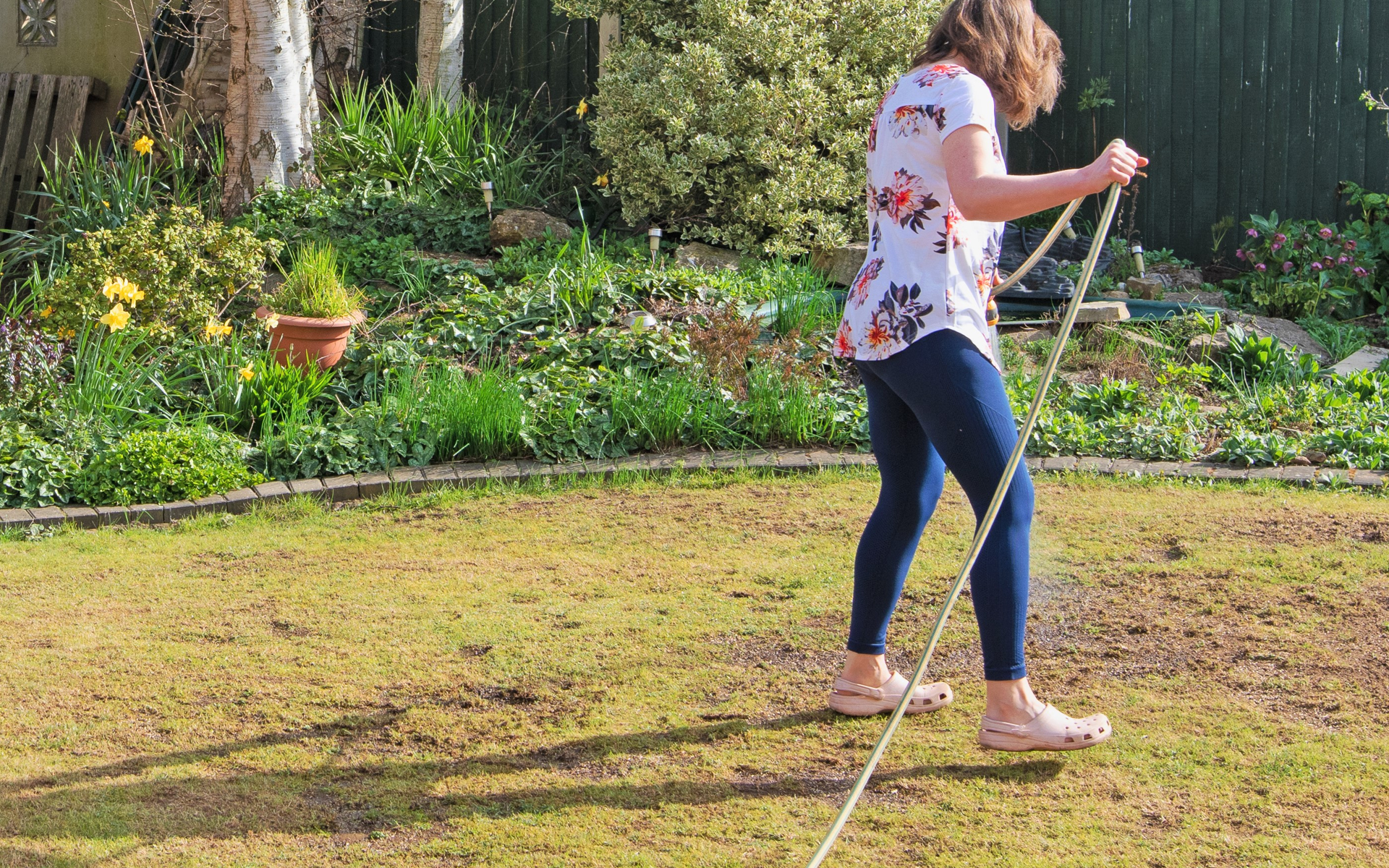
Warm-weather lawn pests are rarely caught in the act. Most people notice the outcome first, a patch that looks scalped, a strip of thinning turf near a path, or birds tearing at the grass like they know something you do not. An absolute disaster for anyone committed to proper Australian lawn care.
The fastest way to narrow it down is to read the damage pattern, then inspect the right spot at the right time.
Quick Triage: What To Check Before You Touch Anything
A fast triage keeps you from tearing up healthy turf or misdiagnosing a watering issue as a pest problem. Start with where the lawn changes from healthy to damaged, not the dead centre of a patch.
Use these quick checks to set direction:
- Look at the shape of the damage, is it a clean-edged patch, a smeared thinning area, or scattered spots
- Note where it starts, edges, paths, sunny stress points, or the middle of the lawn
- Check the leaf tips closely, torn, notched, scraped, or intact but discoloured
- Walk on it, firm, normal, or spongy underfoot
- Try a gentle tug on a small tuft near the edge, does it resist, or lift easily
Once you know whether the lawn is being chewed, stressed, or de-rooted, the likely pests narrow quickly.
Ragged Chewing That Gets Worse After Dusk
When damage looks like the grass has been roughly “mown” in patches, especially if it seems worse in the morning, think caterpillar-type feeders first. These pests often hide during the day and feed after dark, which is why the pattern feels sudden.
You are typically looking for:
- Ragged or uneven leaf edges, as if torn rather than cut
- “Scraped” sections where the green surface looks thinned out
- Small dark droppings (frass) on the surface or in thatch
- Fresh damage that expands overnight, especially along patch edges
A simple confirmation step is a torch check after dark. Part the grass near the boundary of healthy and damaged turf and look for movement in the thatch layer.
Neat Notches and “Windowing” on Leaf Blades
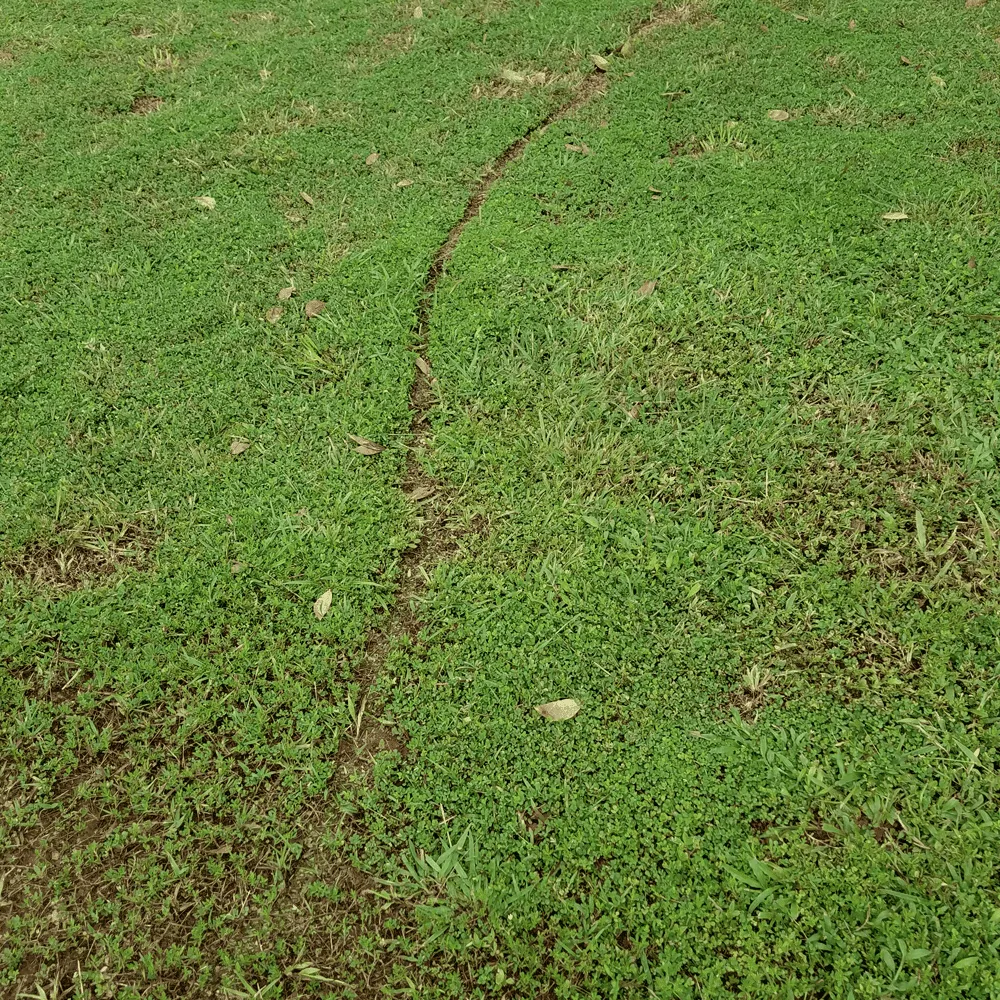
Some chewing patterns are more precise than the ragged, chaotic look people associate with lawn caterpillars. “Windowing” is when the leaf surface looks thinned or translucent in places, as if a top layer has been rasped away.
This pattern often shows up as:
- Pale, semi-transparent sections on blades
- Fine notching rather than large tears
- Damage concentrated in low, sheltered spots where thatch is thicker
- A slow build that turns into rapid thinning when heat stress kicks in
The risk here is confusing it with mower damage or general stress. The difference is repeatability. If the lawn looks fine after mowing but degrades between mow cycles, that points more strongly to feeding activity.
Thinning That Starts Near Edges, Paths, or Sunny Stress Points
A very common pattern in warm weather is thinning that begins where the lawn is already under pressure. That does not automatically mean the issue is “just stress”. Pests often start where turf is easiest to attack, then spread once the plant weakens.
This pattern is usually seen as:
- Gradual thinning that begins along borders, hard edges, or high-heat areas
- A “see-through” look rather than immediate browning
- More visible soil between plants, sometimes with minor discolouration
- Patch edges that creep outward over several days
This is where Australian lawn care basics matter, because stress and pests can stack together. The next step is to check roots at the boundary. If roots are short or missing, a root-feeder is likely involved. If roots look normal, look harder at watering coverage, compaction, and mowing height.
Spongy Turf and Easy Pull-Up
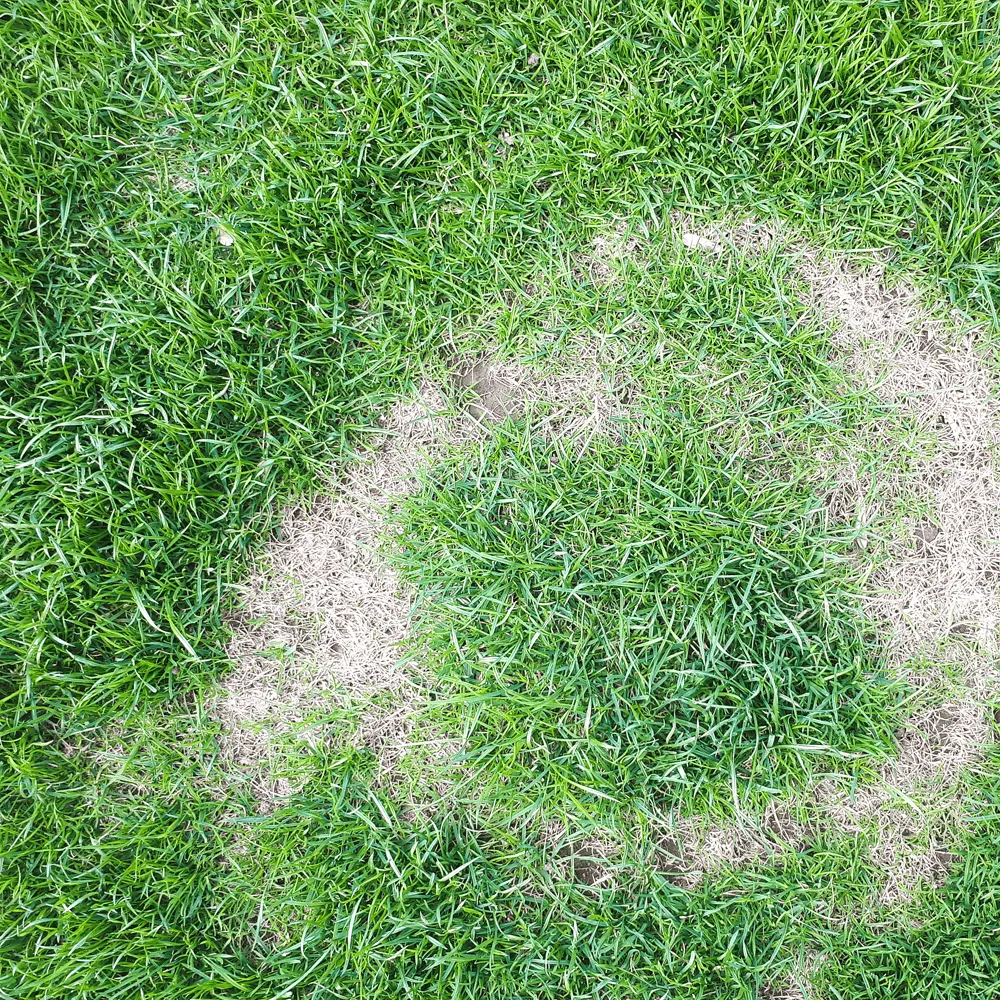
Spongy turf is one of the strongest “act now” patterns in warm weather. When grass lifts easily like loose carpet, the root zone has been compromised. Root-feeding larvae are a common cause, and once roots are damaged, the lawn cannot cope with heat.
Signs that point strongly to root-feeders include:
- Turf feels soft underfoot, especially in a defined patch
- Grass yellows, then browns even though watering seems adequate
- A gentle tug lifts the turf, sometimes in a sheet
- Roots look clipped short, sparse, or absent in the affected area
To confirm, peel back a small flap of turf at the edge of the patch and inspect the top few centimetres of soil. Look for larvae and for the condition of roots, not just the presence of insects.
Birds Tearing at the Lawn, Especially Early Morning
Bird activity is not a pest diagnosis by itself, but it is a strong supporting clue when paired with the right damage pattern. Birds often focus on lawns where larvae or surface feeders are active, and their foraging can dramatically increase visible damage.
Look for:
- Fresh divots or torn tufts, concentrated in one zone
- Bird activity that repeats over several mornings
- Underlying sponginess or thinning that predates the bird damage
- Lifted turf edges where the lawn has been prised up
If birds are tearing at spongy turf, assume there is an underlying root issue until proven otherwise. If birds are pecking at the surface with ragged chewing nearby, surface feeders are more likely.
Wrap-Up
Damage patterns are the shortcut to identifying warm-weather lawn pests without chasing insects you may never see in daylight. The most reliable approach is pattern first, then a targeted confirmation check, then a response that supports recovery as well as control.