There is a huge difference between healthy moisture retention and harmful waterlogging. One keeps your grass cool, hydrated and resilient in summer. The other slowly suffocates roots and creates a perfect environment for disease.
Understanding that difference is one of the most important skills in Australian lawn care. Once you know what is happening below the surface, you can choose soil mixes, products and watering routines that hit the sweet spot instead of swinging between extremes.
Why Moisture Balance Matters More Than Just “More Water”
A lot of lawn issues are blamed on not watering enough. The automatic response is to run sprinklers longer or more often. If the soil is already staying too wet or draining poorly, that extra water only makes things worse.
Moisture balance is about how long water stays in the root zone without pushing all the air out of the soil. Healthy lawns need:
- Water for nutrient uptake and growth
- Air spaces for root respiration
- Stable structure so water moves evenly through the profile
If your soil holds moisture for a reasonable period, then drains and re-aerates before the next watering, your lawn can cope far better with heat, wind and day to day stress.
What Moisture Retention Really Means
Moisture retention is the soil’s ability to store water and release it slowly to plant roots over time. It does not mean keeping the soil constantly wet. Good retention behaves like a sponge that is full but not dripping.
Healthy moisture retention is helped by:
- A balanced mix of sand, silt and clay
- Plenty of well broken down organic matter
- A crumbly structure that absorbs water instead of repelling it
- Soil biology that helps form stable aggregates
With that kind of profile, water from irrigation or rain will soak in, spread through the top 100 to 200 millimetres, then gradually drain and dry to a comfortable level. Roots can move through the soil, and you can get away with fewer, deeper waterings. This is exactly what you are aiming for in smart Australian lawn care.
What Waterlogging Really Is
Waterlogging is what happens when the soil stays saturated for too long. Pores that should hold air are filled with water. Roots sit in a low oxygen environment and begin to suffocate.
Waterlogging can be caused by:
- Heavy, compacted clay that drains very slowly
- A hardpan layer that blocks downward movement of water
- Poor site drainage, low spots or depressions
- Overwatering or frequent shallow irrigation
- Reticulation systems that deliver more water than the soil can handle
Short periods of saturation can be fine, especially after heavy rain. The real problem is when the soil does not get a chance to re-aerate before the next round of water arrives.
Key Differences Between Moisture Retention and Waterlogging
The two concepts can sound similar, but they show up very differently in your lawn. Think of it like this:
- Moisture retention
- Soil feels cool and slightly damp, not squelchy
- Water infiltrates rather than pooling on the surface
- Roots grow deep and are easy to find when you dig
- Grass recovers quickly from heat and foot traffic
- Waterlogging
- Soil feels muddy, sticky or has a film of water
- Water sits in puddles or runs off rather than soaking in
- Roots are shallow, weak or blackened
- Grass may yellow, thin out or develop bare patches
Both situations involve water in the soil, but only one keeps air, structure and biology in a healthy balance.
How Soil Type Influences Moisture and Waterlogging
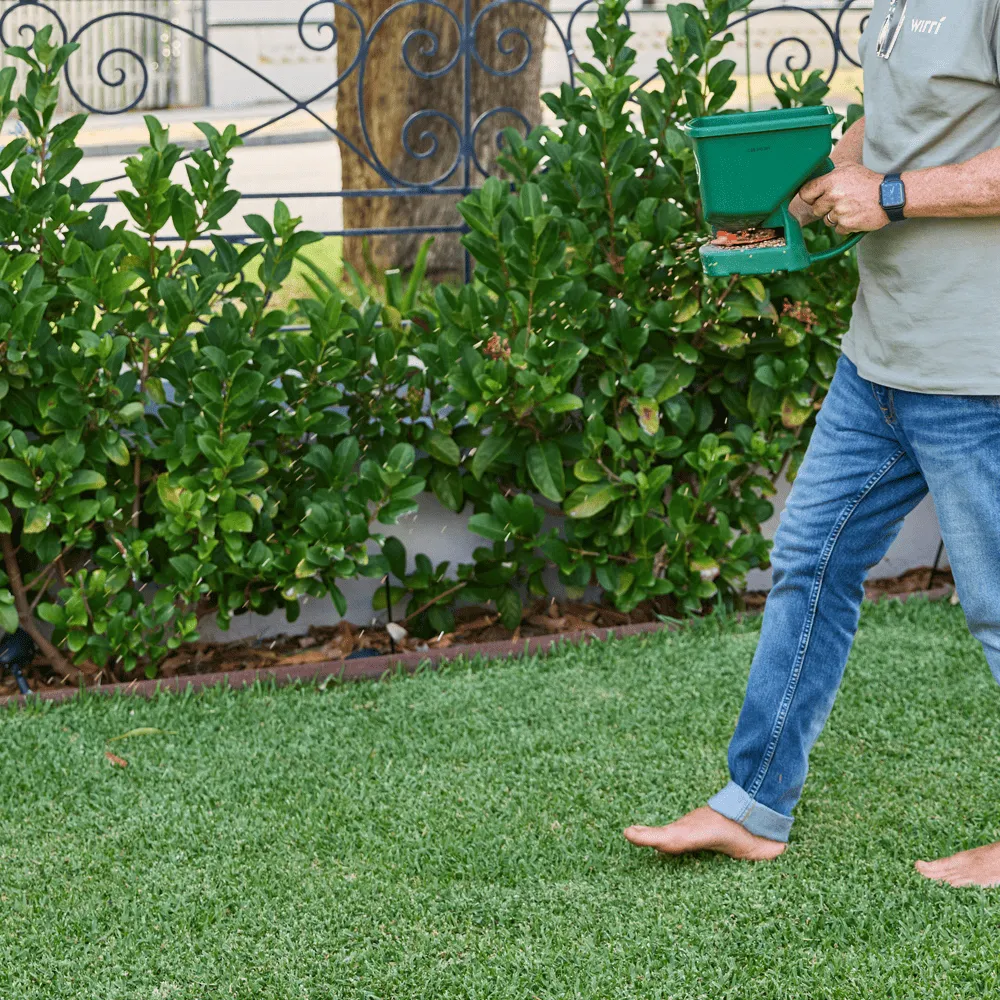
Your base soil type plays a big role in whether you are more likely to struggle with drying out or staying too wet.
- Sandy soils
- Drain very quickly
- Low water and nutrient holding
- Prone to drying out and becoming hydrophobic
- Usually less risk of true waterlogging, except on very flat, compacted sites
- Clay soils
- Hold water and nutrients strongly
- Drain slowly and compact easily
- Higher risk of waterlogging and surface crusting
- Can stay saturated long after rain or irrigation
- Loam and sandy loam
- Sit in the middle
- Good moisture retention without staying soggy
- Ideal for most lawn mixes when blended with organic matter
In many Australian lawns, the goal is to push extreme sands or clays toward a loam-like behaviour. This is where soil conditioners, compost and quality lawn soil mixes are so valuable for long term Australian lawn care.
Find The Moisture Sweet Spot, Not the Extremes
Healthy lawns do not want to be soaked or bone dry. They want a consistent cycle of wetting and drying that keeps both water and air in the soil. Moisture retention is your friend when it means a well-structured soil that holds water and releases it slowly. Waterlogging is the enemy when it means roots sit in stagnant, low oxygen conditions.