Strata buildings run on shared electrical infrastructure, and most of it sits out of sight until something trips, fails, or becomes a safety issue. A proper strata electrical safety audit is not just a quick look at a switchboard.
It is a structured check of the common electrical system, the risks around it, and the practical steps needed to keep it safe, maintainable, and fit for the way the building is used. Getting the components right makes the report useful, the budgeting easier, and the follow-up work less reactive. Done well, it also supports stronger strata electrical safety outcomes across common property.
Audit Scope and Boundaries
A useful audit starts with a clearly defined scope. Without that, results can be misleading, because “electrical” in strata can mean anything from a main switchboard to car park lighting to gate motors, pumps, comms rooms, or emergency systems interfaces. The scope should state what is included, what is excluded, and what access is required to complete the inspection safely.
Common scope decisions usually cover the line between common property and lot owner responsibility. It also covers whether the audit is purely visual, includes non-invasive checks (like enclosure condition and labels), or includes targeted testing. For strata electrical safety, having the scope defined properly matters because it sets expectations and reduces the chance of a report that misses obvious risk areas simply because they were “not in scope”.
Typical scope elements include:
- Common property switchboards and distribution boards
- Meter rooms and shared electrical cupboards
- Common area lighting and power circuits
- Plant rooms and fixed equipment connections
- Earthing, bonding, and protective devices
- Documentation review (labels, circuit schedules, as-built info)
- A risk-based defect register with priorities
Site Access, Safety, and Work Method
The way an audit is conducted affects both safety and accuracy. Electrical rooms, risers, ceiling spaces, and plant rooms can be cramped, hot, dusty, and occasionally wet. A competent auditor will manage access properly, identify hazards on arrival, and plan the inspection so it does not create risk while checking risk.
This part of the audit is often invisible in the final report, but it shapes what can be inspected and what needs follow-up access. It also helps reduce disruption. For example, a well-planned audit can group checks by area, avoid repeated lock-ups, and schedule any required outages with proper notice.
Practical method considerations include:
- Confirming keys, permits, and access permissions
- Verifying safe isolation points for any necessary internal checks
- Managing confined spaces, heat, and ventilation risks
- Noting signs of water ingress, corrosion, or pest activity
- Confirming whether any systems are mission-critical (lifts, fire interfaces, ventilation)
Main Switchboards and Distribution Boards
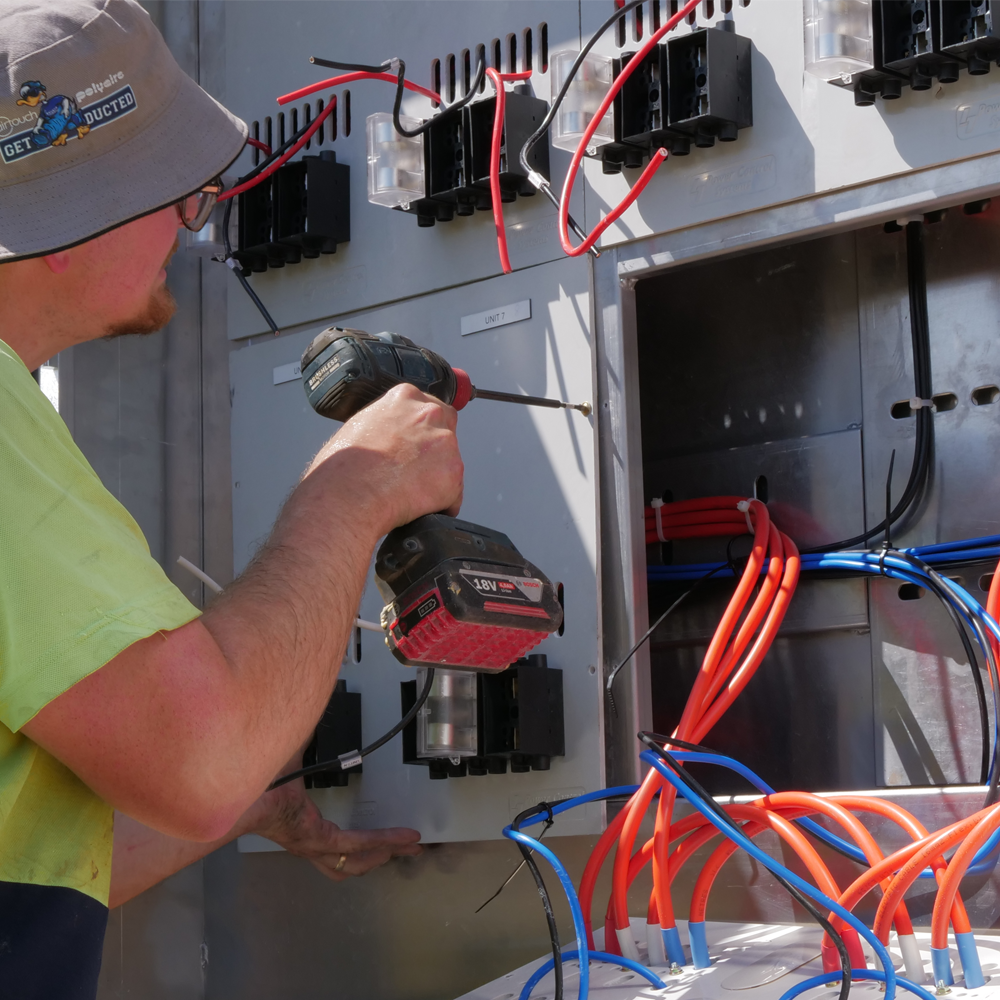
Switchboards are a core component because they control how power is distributed and protected. In strata, the main switchboard and sub-boards often feed common lighting, basement systems, pumps, security, and sometimes shared amenities. An audit should examine enclosure condition, access, labelling, segregation, and signs of overheating or wear.
This is also where an audit can identify whether boards are becoming difficult to maintain safely. Poor access, missing covers, cramped cabling, and inconsistent labelling all increase the chance of mistakes during repairs. From a strata electrical safety perspective, “maintainable” is part of “safe”.
Common switchboard checks include:
- Signs of heat damage, scorching, or discolouration
- Loose, damaged, or missing covers and escutcheons
- Cable entry condition, glands, and mechanical protection
- Ventilation, dust build-up, and moisture evidence
- Labels, circuit schedules, and isolation identification
- Clearance and working space around boards
Protective Devices and RCD Coverage
Protection is about limiting fault energy and reducing the chance of electric shock or fire. An audit should review the type and condition of protective devices, and whether protection is appropriate for the circuits served. In some cases, it will highlight areas where additional protection may be recommended, particularly where common areas have sockets, external power, or higher exposure to moisture.
RCD coverage is a frequent discussion point in strata, especially when older buildings have uneven protection across circuits. The audit should not just say “add RCDs” in a blanket way. It should identify which circuits, which risks, and what practical upgrade paths exist without causing unnecessary disruption.
Typical protection checks include:
- Condition and suitability of circuit breakers and fuses
- Evidence of nuisance tripping patterns (where known)
- RCD presence on relevant common property circuits
- Correct identification of circuits needing higher shock protection
- Signs of device ageing or thermal stress
Earthing and Bonding Integrity
Earthing and bonding are fundamental for electrical safety, but they are also easy to overlook because problems are not always visible. A strong audit checks for obvious defects (missing bonds, corrosion, loose connections) and flags anything that needs further testing if the visual evidence suggests deterioration.
In strata buildings, earthing issues can show up in meter rooms, risers, plant rooms, and areas with metallic services. If earthing and bonding are compromised, fault protection may not operate as intended. That is why this component is always central to strata electrical safety.
Common earthing and bonding checks include:
- Visible earthing conductor condition and terminations
- Corrosion at connections, particularly in coastal or damp areas
- Bonding to relevant metallic services where applicable
- Signs of ad hoc changes over time with no documentation
- Enclosure bonding and continuity indicators
Meter Rooms, Riser Cupboards, and Shared Pathways
Meter rooms and risers are high-traffic areas for contractors but low-visibility areas for residents. They can also become storage areas, which is a problem. An audit should check that these spaces are fit for purpose, not overcrowded, not blocked, and not hiding damage behind stacked items.
Shared pathways matter because cable routes are often affected by other trades, water leaks, pests, and building movement. A practical audit notes the condition of conduits, cable trays, penetrations, fire-stopping interfaces (where visible), and mechanical protection.
Key checks in these areas include:
- Unauthorised storage and blocked access
- Missing labels or mismatched meter and circuit identification
- Damaged conduits, exposed cabling, or open penetrations
- Evidence of water ingress, staining, or corrosion
- Cable supports, trays, and mechanical protection condition
Plant Rooms and Fixed Equipment Connections
Plant rooms combine electrical equipment with moisture, vibration, and mechanical activity. Pumps, fans, basement ventilation, irrigation controllers, and booster systems are common examples. Audits should check isolators, cable condition, enclosures, and whether equipment is connected and protected appropriately.
This is also where the audit should focus on maintainability. If isolators are inaccessible, unlabeled, or not working properly, routine servicing becomes riskier. Plant rooms often drive after-hours call-outs when something fails, so improving safety and reliability here has a direct operational payoff.
Plant room checks often include:
- Condition of isolators and local switching
- Water exposure and enclosure ratings suitability
- Cable entries, seals, and corrosion signs
- Identification of critical equipment circuits
- Signs of repeated overheating or temporary fixes
Common Area Lighting, Emergency Lighting, and External Assets
Lighting in common areas is usually one of the most reported issues, but it is also one of the easiest places for short-term patching to hide deeper problems. An audit should review lighting circuits, fitting condition, and external exposure. Car parks, walkways, bin areas, and pool surrounds can be harsh environments, so the audit should look for impact damage and water exposure risks.
Emergency lighting is a separate topic in many buildings, but it still interacts with electrical infrastructure. An electrical audit should at least identify obvious issues, such as unsafe wiring, damaged fittings, or missing isolation and labelling. Even when specialist testing is handled elsewhere, basic electrical safety observation supports better strata electrical safety control overall.
Typical checks include:
- Damaged fittings, cracked diffusers, and exposed wiring
- Water ingress signs in external and wet-adjacent areas
- Corroded fixings and deteriorated conduits
- Lighting circuit capacity issues and repeated failures
- Clear identification of emergency-related circuits and isolation points
Thermal Stress Indicators and Early Warning Signs
Some of the most valuable audit findings are not dramatic hazards, they are early warning signs. Heat marks, discolouration, brittle insulation, unusual smells, and minor enclosure deformation can indicate stress that may later become a fault. A competent audit documents these signals clearly, because they often justify preventive work before a failure occurs.
This component matters because it changes the building’s maintenance posture from reactive to planned. It also reduces the chance of surprises, which is one of the biggest frustrations for committees and managers trying to keep budgets stable.
Common early indicators include:
- Browned insulation near terminations
- Heat-related discolouration around device faces
- Repeatedly reset breakers with no root cause noted
- Dust build-up suggesting poor sealing or ventilation
- Rust patterns indicating ongoing moisture exposure
Documentation, Labels, and Isolation Mapping
A building can have good electrical hardware and still be unsafe to work on if the documentation is poor. Missing labels, incorrect circuit schedules, and unclear isolation points increase the chance of accidental shutdowns or unsafe maintenance activity. Audits should treat documentation as a safety component, not admin.
For strata electrical safety, accurate labelling and isolation mapping is one of the most cost-effective improvements you can make. It reduces downtime, speeds up fault finding, and lowers the risk of mistakes when multiple contractors have worked on the system over time.
Documentation checks usually include:
- Correct board labelling and legible circuit schedules
- Clear identification of main isolators and sub-board feeds
- Consistency across meter room labels and distribution boards
- Notes on missing as-built drawings or outdated records
- Recommendations for practical labelling upgrades
Defect Classification, Risk Ratings, and Priorities
The audit’s findings need structure, otherwise the report becomes a list of problems with no clear direction. A strong report classifies defects, assigns a risk level, and recommends timeframes for action. It should also separate safety-critical issues from improvement opportunities.
This is where many reports fall short. If everything is labelled “urgent”, committees stop trusting the priorities. If nothing is urgent, real hazards can sit for too long. Good defect ranking supports better decisions and builds momentum on the right work first, which improves strata electrical safety in a measurable, day-to-day sense.
A practical defect framework often includes:
- Immediate make-safe items (high shock or fire risk)
- Short-term repairs (risk trending upward, failure likely)
- Medium-term upgrades (ageing equipment, capacity limitations)
- Long-term planning items (major board upgrades, staged modernisation)
Budgeting and Packaging Remediation Works
Audits are most useful when they translate into scopes that contractors can quote accurately. Packaging works sensibly also reduces disruption, because the team can isolate once, access once, and complete related fixes together. It is also an opportunity to reduce repeated call-out fees and unnecessary after-hours work.
A practical audit report often supports budgeting by grouping recommendations by location and priority. It also identifies dependency, for example, you may need better labelling before you can safely stage certain upgrades, or you may need access improvements to plant rooms before equipment can be serviced safely.
Common remediation packaging approaches include:
- Bundle works by board or room (meter room package, plant room package)
- Separate urgent make-safe works into a fast response scope
- Schedule disruptive works with notice (outages, access to risers)
- Combine electrical improvements with other building works when practical
- Build a staged plan that fits levy cycles and sinking fund planning
Ongoing Monitoring and Re-Audit Triggers
An audit is a snapshot, so it should also point to what changes will trigger a review. Buildings change over time, especially as security systems expand, loads increase, and new equipment is added. EV charging, solar upgrades, and refurbishments can all shift load profiles and create new pathways for risk.
Strata electrical safety improves when audits are part of a cycle, not a one-off. The cycle does not need to be excessive, it just needs to respond to the building’s risk profile and change rate.
Useful re-audit triggers include:
- Repeated tripping, flicker, or unexplained outages
- Water ingress events in basements, risers, or roof spaces
- Major upgrades (EV, solar, access control expansions)
- Increased maintenance frequency in plant and common lighting
- Discovery of undocumented alterations or missing records
Key Takeaways
A strong audit is built from clear scope, safe access planning, thorough checks of boards, protection, earthing, risers, plant rooms, and common area assets, plus documentation that makes future work safer. The best reports do more than list defects, they rank risk, set realistic priorities, and make it easy to budget and stage remediation. When those components are in place, strata electrical safety becomes easier to manage, easier to fund, and far less likely to be driven by emergencies.