Backyard builds across Perth tend to ramp up the moment the weather cools off. Winter’s the season plenty of homeowners get a proper crack at the shed or patio that’s been parked on the list for a year.
The material chosen for the panels and cladding decides more about the finished job than most first-timers expect. Aluminium flat sheet metal keeps coming up as the pick for DIY work, and the reasons hold up once the tools come out.
Why Aluminium Flat Sheet Suits a Perth Winter Build
Aluminium flat sheet is well suited to Perth winters because it shrugs off wet weather without corroding in salt air. The metal also stays workable on cold mornings when other jobs stall. Perth’s wet season runs roughly June through August, and that’s exactly when most patio and shed projects get going.
A few reasons it lines up with the local climate:
- A non-rusting panel can sit half-installed through a wet weekend without taking damage, which suits a stop-start DIY timeline.
- Suburbs from Scarborough down to Fremantle deal with constant marine air, and aluminium handles it without sacrificial coatings.
- The metal doesn’t get brittle in the cold, so early-morning cutting and bending stay predictable.
- A finished aluminium patio roof rarely needs more than an occasional hose-down, which matters on a set-and-forget build.
The wet timing also means fewer flies and less heat on the back, so the actual labour is more pleasant. Winter builds tend to move quicker for that reason alone.
Where Aluminium Earns Its Keep on a DIY Job
Aluminium flat sheet earns its place on a DIY build through easy handling, clean cutting, and a finish that doesn’t demand attention. The savings show up in time and frustration as much as on the invoice.
Common spots where it pays off:
- Patio roof infill and fascia, where light panels make solo install realistic.
- Shed wall cladding and gable ends that need straight, flat coverage.
- Flashing and capping around joins, since the sheet cuts and folds cleanly by hand.
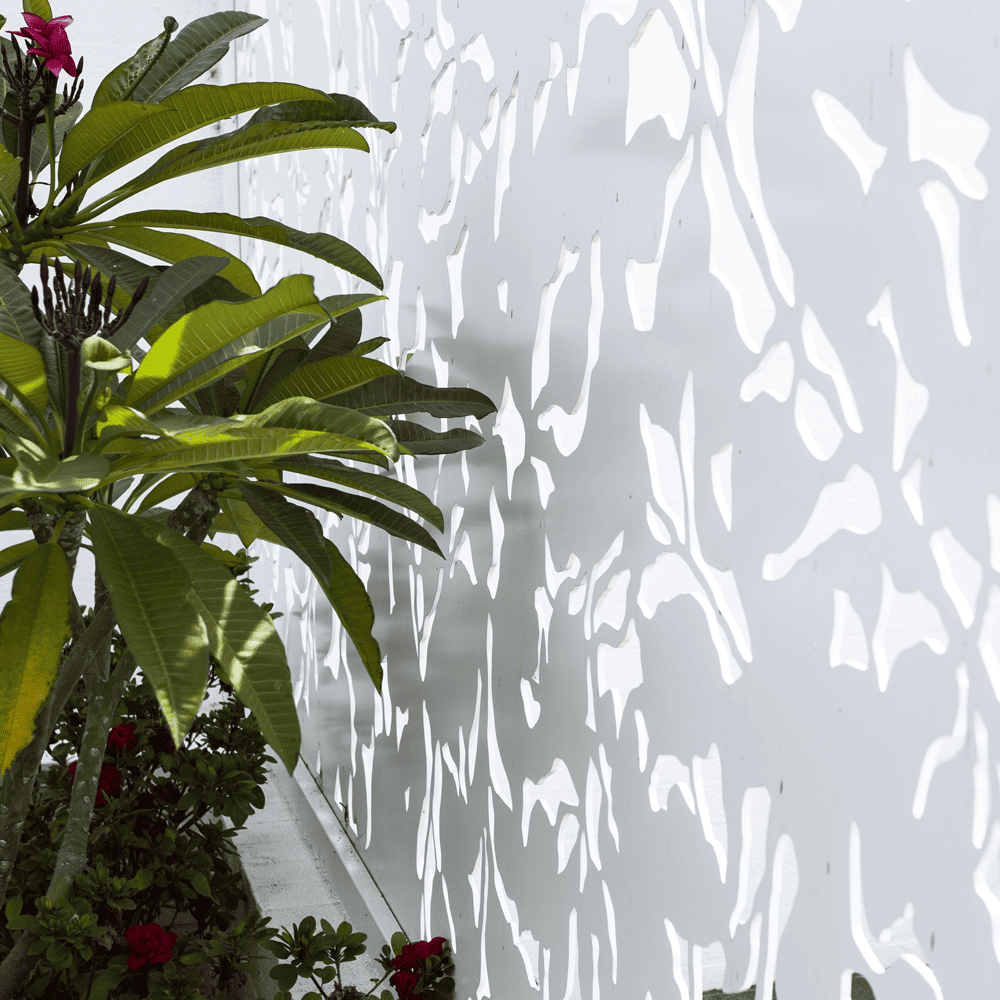
- Decorative screens or privacy panels, where a flat surface takes a powder-coat or perforation well.
Field experience shows the flat profile is forgiving for beginners. There’s no clipping system to line up and no overlap pattern to get wrong. So a first-timer can produce a tidy result without specialist training. That’s a big part of why supply yards push it for weekend projects.
Working the Sheet Without a Full Workshop
Aluminium flat sheet can be cut, drilled, and folded with standard home tools, which is the main reason it suits people without a trade fit-out. A circular saw with a non-ferrous or fine-tooth blade handles straight cuts cleanly, and tin snips do the smaller work.
A practical approach for the home shed:
- Score and snap thinner gauges (around 0.9mm) using a straightedge and a sharp blade for clean lines.
- Use a fine-tooth blade for thicker sheets and let the tool do the work rather than forcing it.
- Drill with a standard HSS bit, backing the sheet with timber to stop it grabbing.
- Fold neat bends over a length of angle iron clamped to a bench.
- Deburr cut edges with a file, since aluminium throws a sharp lip that’ll catch a hand.
The metal’s softer than steel, so blades and bits last longer and the cutting’s quieter. The common line in the trade is that aluminium forgives a rough technique that would wreck a steel job.
Mistakes That Catch Out First-Time Builders
The most common aluminium errors come down to galvanic corrosion, poor fixings, and rushed measuring. Each one’s avoidable with a bit of forethought, and each one’s a pain to fix once panels are up.
Watch for these:
- Bolting aluminium straight to bare steel or treated pine invites galvanic corrosion, so use isolation washers or compatible fasteners.
- Plain steel screws will stain and seize in aluminium, so stainless or coated self-drillers are the go.
- The metal’s soft, and an over-driven screw dimples the surface or strips the hole.
- Aluminium moves a fair bit with temperature, so panels fixed too tight can buckle or pop fixings if there’s no expansion gap.
There’s no point throwing money at premium sheet and then fixing it with the wrong screws. Most callbacks on DIY jobs trace back to fastener choice rather than the panel itself.
Frequently Asked Questions
Is Aluminium Flat Sheet Strong Enough for a Patio Roof?
Yes, provided the right gauge and frame spacing are used. A 1.6mm or thicker sheet on properly spaced battens handles Perth wind and rain loads on a residential patio. The frame does the structural work, so the sheet mainly needs to span between supports without flexing.
Can Aluminium Flat Sheet Be Painted or Powder-Coated?
Yes, and it takes finishes well. Bare aluminium can be powder-coated for colour and extra durability, or left raw for an industrial look that ages slowly. The flat surface gives an even coat, which is harder to achieve on profiled sheeting.
What Thickness of Aluminium Sheet Is Best for Shed Walls?
For shed wall cladding, 0.9mm to 1.2mm is the usual range. It’s light, cuts easily, and holds its shape across standard stud spacing. Thicker sheet only makes sense where the wall doubles as structure or faces heavy knocks.
Final Thoughts
Aluminium flat sheet metal keeps its spot at the top of the DIY list for sound reasons. It doesn’t rust, it’s light enough to handle alone, and the cutting works with tools already sitting in most home sheds. For a Perth winter build sitting in salt air and wet weather, that combination saves both time and ongoing maintenance.