Soil compaction happens when soil particles are pressed tightly together, removing the microscopic air pockets between them. This structural collapse turns soft loam into something resembling concrete. Lawn care professionals constantly see property owners throwing expensive fertiliser on dead dirt. They expect a miracle.
The Physics of Hardened Ground
Compacted ground physically blocks root expansion by reducing soil porosity and increasing soil bulk density beyond tolerable limits.
- Micro-pores collapse entirely under the constant weight of heavy foot traffic.
- Gas exchange between the dirt and the atmosphere stops functioning.
- Beneficial microbes die off rapidly in the airless environment underground.
- Surface crusting forms a physical shield against new seed establishment.
Healthy topsoil contains roughly 50 percent solid matter and 50 percent pore space. Those tiny gaps hold vital oxygen and water. Heavy traffic crushes those spaces completely flat. Bulk density increases sharply as the air gets squeezed out.
Root Suffocation and Growth Halts
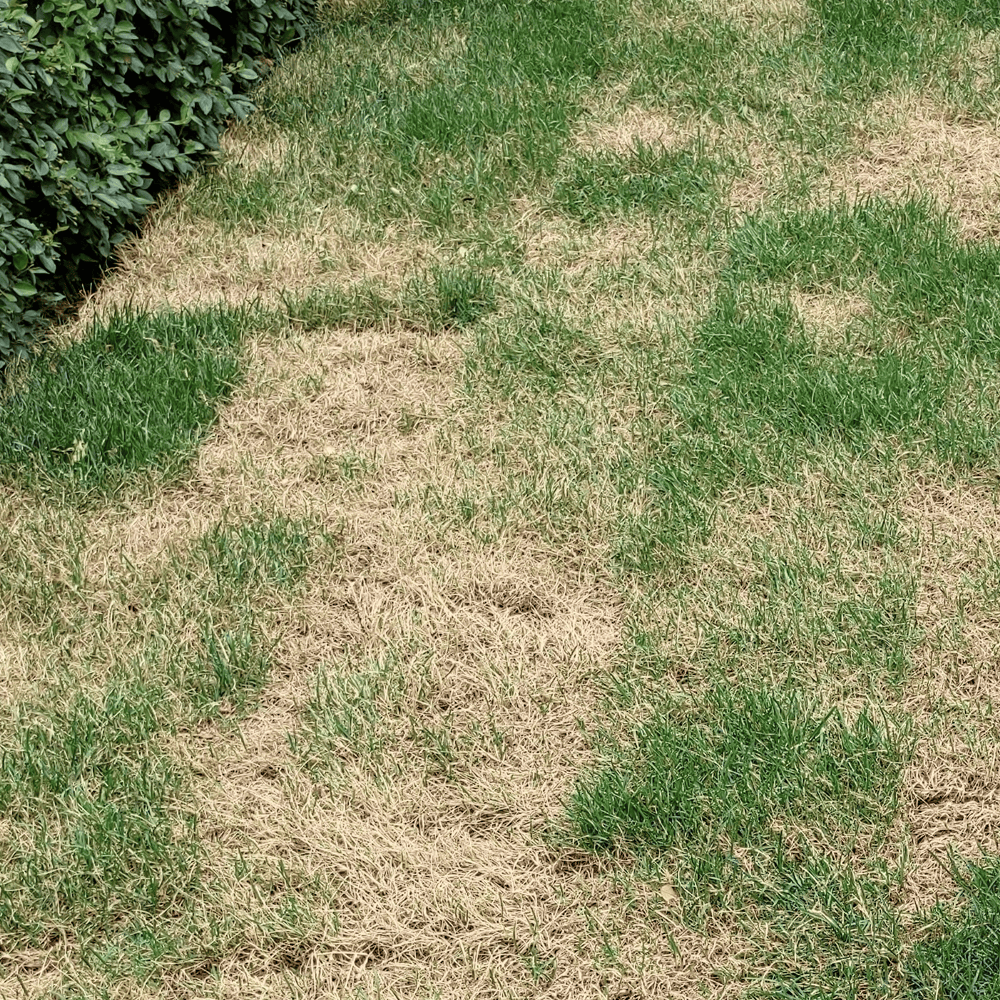
Roots suffocate in compressed earth because the lack of macropores cuts off the oxygen supply required for cellular respiration.
- The primary taproots hit the compacted zone and immediately grow sideways.
- Fine feeder roots fail to develop, heavily limiting daily water uptake.
- The entire root mass stays trapped in the top two centimetres.
- Summer heat easily fries the shallow, exposed root system.
Plants breathe through their root systems. They need a constant supply of oxygen to metabolise carbohydrates. Compacted layers trap stale carbon dioxide below the surface. Fresh oxygen can’t filter down through the dense dirt.
Water Infiltration Failures
Soil compaction prevents water infiltration by sealing the surface, causing irrigation to run off rather than soaking into the root zone.
Water naturally follows the path of least resistance. Hard ground offers very high resistance. A standard sandy loam absorbs water quickly and deeply. Compacted clay might only take in a few millimetres an hour.
Heavy rainfall just washes straight into the street. The grass gets absolutely nothing from the downpour. This creates a frustrating cycle for property maintenance. Irrigation systems run for hours on end.
Nutrient Lockout in Tight Soils
Compressed soil causes nutrient lockout because the lack of moisture movement prevents dissolved minerals from physically reaching the plant roots.
- Phosphorus remains stuck at the surface because it requires active root foraging.
- Iron becomes physically unavailable, causing yellowing across the new leaf blades.
- Nitrogen gets lost to the atmosphere through a chemical process called denitrification.
- Potassium uptake drops heavily, leaving the grass weak against frost damage.
Fertiliser doesn’t work if it can’t dissolve and travel. Granular products just sit uselessly on the hard surface. Liquid applications run off into the gutters before they penetrate. The grass starves while surrounded by expensive nitrogen.
The Collapse of Soil Biology
Hardpan conditions wipe out soil biology by creating an oxygen-starved environment where beneficial microbes and earthworms can’t survive.
Good dirt’s highly active and alive. Billions of bacteria and fungi break down dead organic matter. They feed the grass naturally through nutrient cycling. Those microscopic organisms require loose, airy soil to function.
Compaction crushes their delicate habitat. Earthworms are usually the very first casualties. They won’t tunnel through concrete-hard dirt. Their absence removes vital natural aeration channels from the profile.
Temperature Extremes in Dense Dirt
Dense dirt experiences extreme temperature fluctuations because it lacks the insulating air pockets found in properly structured soils.
Air acts as an excellent natural insulator. Loose soil holds pockets of air that buffer roots against extreme heat and cold. Compacted soil loses this vital insulating capacity entirely. Solid mass conducts heat rapidly.
During a baking Australian summer, hard dirt absorbs and retains intense heat. The root zone temperatures spike well beyond the survival limits of most turf varieties. The grass practically cooks in the ground.
Frequently Asked Questions
Does Heavy Rain Cause Soil Compaction?
Heavy rain contributes to compaction by breaking down weak soil aggregates on the bare surface. The beating action of large raindrops seals the top layer entirely. This forms a hard, impenetrable crust when the dirt eventually dries out.
Can Wetting Agents Fix Hard Ground?
Wetting agents only treat water repellency on the immediate surface of the dirt. They don’t change the physical structure or density of the soil profile. Mechanical intervention remains required to actually break apart the compressed dirt particles.
How Long Does Turf Recovery Take After Aeration?
Grass typically shows new root growth within two to three weeks of proper soil fracturing. Full surface recovery depends heavily on the specific grass species and the season. Summer-active grasses bounce back quite quickly during warmer months.
Final Thoughts
Reviving a dead patch of grass is essentially a structural engineering job. The dirt dictates everything that happens above ground. Ignore the soil conditions, and the grass will fail every single time.
Most operators reckon the biggest mistake property owners make is treating the leaf instead of the dirt. Fixing the physical density of the soil provides the only real foundation for turf recovery. There isn’t any magic shortcut to good soil structure.