There’s a common assumption that low maintenance lawn care means accepting a rougher-looking lawn. That’s not how it works in practice. The healthiest low-input lawns aren’t the ones where everything’s been scaled back evenly. They’re the ones where a few high-impact tasks are done well and everything else is left alone.
The distinction matters because randomly cutting effort tends to create problems that take more time to fix than the original routine would’ve cost. Most turf operators reckon the real skill is knowing which inputs to keep and which ones to ditch.
Why Reducing Effort in the Wrong Places Backfires
The biggest trap with low maintenance lawn care is cutting the tasks that feel like work while keeping the ones that feel easy. Most homeowners will happily skip a seasonal feed but keep watering daily, which is exactly backwards.
- Skipping an autumn feed saves 20 minutes but costs the lawn its winter resilience. The turf thins out, weeds move in, and spring becomes a repair job.
- Daily shallow watering feels productive but trains roots to stay near the surface. The lawn becomes more drought-sensitive, not less.
- Ignoring early signs of grub damage because “it’ll sort itself out” can turn a $30 treatment into a full re-turfing job by the following season.
The pattern is consistent across most residential lawns. The owners who spend the least total time are the ones who front-load the right tasks and then step back. The ones who avoid everything until it’s visibly bad always spend more in the end.
Which Inputs Protect Health and Which Ones Are Optional
Some lawn care tasks directly protect turf health. Others are cosmetic or habitual. Telling the difference is where most of the time savings come from.
- Seasonal feeding (twice a year minimum, autumn and spring) is non-negotiable for maintaining density and colour. Drop this and the lawn will thin within a single season.
- Mowing at the right height protects the crown of the plant and shades the soil, reducing moisture loss. It costs no extra time compared to mowing badly.
- Watering deeply but infrequently builds root depth. Two good soaks a week beat seven light sprinkles, and it’s less total effort.
- Edging, dethatching, and aerating are all beneficial but can be done annually or even every second year on most home lawns without health consequences.
The common line in the trade is that a lawn can coast on good soil and a decent grass variety for quite a while, as long as the feeding and mowing basics aren’t neglected. Everything else is a bonus.
Feeding Less Often Without Letting the Lawn Slide
Two well-timed feeds a year is the minimum for maintaining turf health on most Australian lawns. One in early spring and one in mid-autumn will keep the grass dense enough to resist weeds and recover from seasonal stress.
- Spring feeds should lean toward higher nitrogen to push growth after winter dormancy. A slow-release granular product means the nutrients meter out over six to eight weeks.
- Autumn feeds should have moderate nitrogen and higher potassium to support root storage and cold tolerance heading into winter.
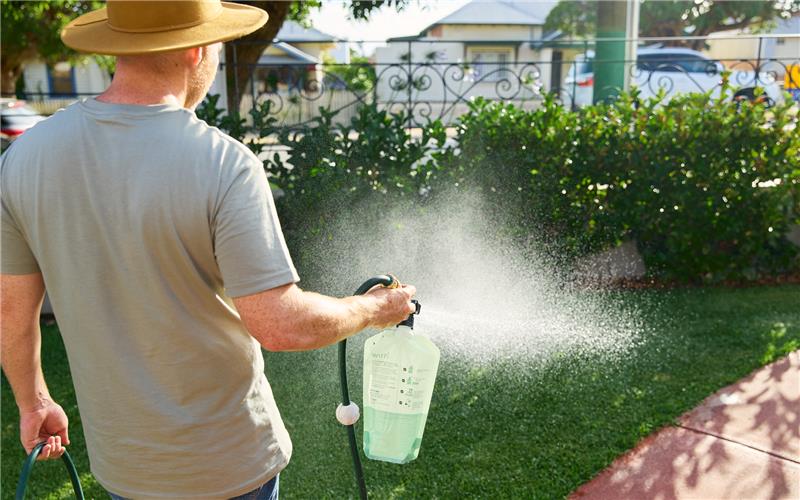
- Liquid seaweed applied once in autumn gives roots a boost without adding excess nitrogen. It’s a ten-minute job with a hose-end sprayer.
Lawns on decent soil with a good grass variety can genuinely get by on this. The turf won’t look competition-grade, but it’ll hold its colour, stay thick enough to suppress weeds, and recover well from wear. That’s the practical definition of healthy on a low-input programme.
Throwing on extra fertiliser “just in case” is a false economy. Over-feeding pushes soft, fast growth that needs more mowing, more water, and is more susceptible to pest damage. More product doesn’t mean more health.
Frequently Asked Questions
Can a Lawn Stay Healthy with Only Two Feeds a Year?
For most established warm-season lawns on reasonable soil, two feeds (spring and autumn) will maintain acceptable health and density. Lawns on very sandy or nutrient-poor soils may need a third mid-summer application. The key is using slow-release products that extend nutrient availability over several weeks.
What’s the Minimum Mowing Frequency for a Healthy Lawn?
During peak growing season, most warm-season grasses need mowing every ten to fourteen days to stay within the one-third rule. In autumn and winter, fortnightly to monthly is usually sufficient. Mowing less often is fine as long as the height isn’t left so long that cutting it back removes too much leaf at once.
Does Skipping Aeration Hurt Lawn Health?
Aeration is beneficial but not essential every year for most home lawns. Lawns on heavy clay or in high-traffic areas benefit from annual aeration in spring or early autumn. Lawns on loamy or sandy soils with light foot traffic can often go two to three years between aeration without visible decline.
Final Thoughts
Low maintenance lawn care that keeps the turf healthy comes down to a handful of well-timed inputs and the discipline to skip everything else. Two feeds, proper mowing height, deep watering, and a sharp eye for problems that actually need fixing. That’s the list.
The lawns that cop a hammering and still look decent year after year aren’t getting secret treatments. They’ve got the basics right: good variety, reasonable soil, and an owner who doesn’t overcomplicate things. That’s the whole game.