Commercial buildings in WA answer to the Australian Standards their building approval called up through the NCC, in the edition current at the time. For ongoing servicing, AS 1851 is the accepted benchmark across most fire systems.
Everything else about fire safety compliance in WA hangs off those two points. It’s also why two near-identical warehouses in Welshpool can legally answer to different editions of the same standard.
How a Standard Becomes Legally Binding in WA
An Australian Standard only becomes mandatory in WA when legislation or an approval points to it. On its own, a standard’s just a technical document published by Standards Australia.
- The Building Act 2011 sets up the permit system and the enforcement powers behind it.
- The Building Regulations 2012 adopt the NCC as WA’s building code.
- NCC Volume One carries the deemed-to-satisfy provisions for Class 2 to 9 buildings.
- Classes 3 and 5 to 9 take in accommodation, offices, shops, warehouses, factories and public buildings.
- The NCC’s schedule of referenced documents names each standard, down to the edition.
- The building permit and its supporting documents tie the whole chain to one specific building.
Maintenance sits in its own regulation. Regulation 48A requires owners of Class 2 to 9 buildings to keep their safety measures capable of performing to the relevant building standards. It took over from the NCC’s old Part I maintenance provisions, which were deleted on 1 May 2014. Local government permit authorities enforce it, and infringement notices are on the table for owners who let things slide.
The Core Standards by System Type
Each fire safety system in a commercial building answers to its own design standard, and most share AS 1851 for servicing. The design standard sets how a system goes in, while the servicing standard keeps it performing afterwards.
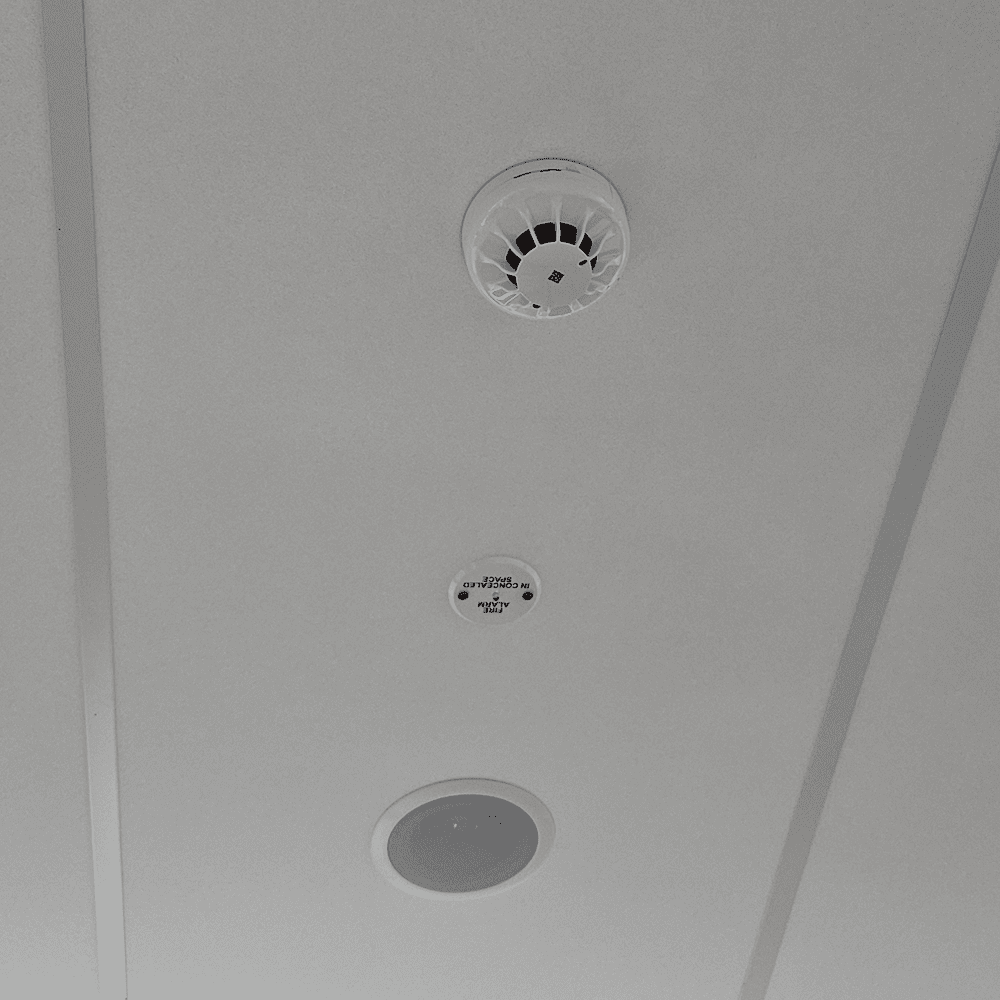
- Detection and alarm systems are designed and installed to AS 1670.1, and alarm monitoring falls under AS 1670.3.
- Larger buildings with an emergency warning and intercommunication system (EWIS) pick up AS 1670.4.
- Automatic sprinklers follow AS 2118.1, and fire hydrant installations follow AS 2419.1.
- Hose reels sit under AS 2441, with portable extinguishers selected and located to AS 2444.
- Emergency lighting and exit signs are designed to AS/NZS 2293.1, with maintenance handled separately under AS/NZS 2293.2.
- Smoke control within air-handling systems follows AS 1668.1.
Passive fire protection gets less airtime but causes plenty of grief. Fire-rated walls are tested to AS 1530.4, and service penetrations are typically assessed against AS 4072.1.
One plumber punching through a rated wall without a tested collar can undo a compliant design in an afternoon.
How Often AS 1851 Servicing Happens
AS 1851 servicing runs on fixed routines set out in the standard’s tables, starting at monthly and stretching to five-yearly and beyond. The exact set of routines depends on the system type.
- Short-interval routines, at monthly and six-monthly, focus on functional checks and fault response.
- The yearly routine includes the annual condition report issued to the owner.
- Longer routines, from five-yearly upwards, cover more invasive inspections, mostly on water-based systems.
- DFES separately requires monthly testing for systems on its Direct Brigade Alarm network.
The yearly condition report carries more weight than most owners realise. It shows whether a system still matches its baseline data, and it’s usually the first thing an auditor asks for.
Performance Solutions and the Fire Engineering Report
When a building relies on a performance solution, its fire engineering report becomes part of the compliance baseline alongside the referenced standards. Every departure from deemed-to-satisfy provisions lives in that report, and servicing has to match it. Buildings with a performance solution usually show one or more of these signs:
- large open atriums or warehouse floors with unusually long egress paths
- sprinklers or detection missing from areas where deemed-to-satisfy provisions would normally require them
- smoke exhaust or stair pressurisation that doesn’t follow a standard cause-and-effect matrix
- a reference to a fire engineering brief or report in the building permit documents.
The trouble shows up years later. The report goes missing across a couple of ownership changes, and the service contractor tests against deemed-to-satisfy settings instead. The system then gets “fixed” into a state it was never approved for.
Frequently Asked Questions
Does AS 1851 Apply to Every Commercial Building in WA?
AS 1851 is the accepted benchmark for meeting Regulation 48A, which itself refers only to the relevant building standards. In practice, almost every WA commercial building with active fire systems is serviced to it. DFES requires it outright for systems on the Direct Brigade Alarm network.
Do Existing Buildings Have to Upgrade to the Latest NCC?
Generally, no. Existing buildings keep the compliance basis they were approved under, provided their safety measures are maintained. Upgrades usually follow new building work or a change of classification. The permit authority can also issue a building order requiring work.
Which Edition of AS 1670.1 Applies to a New Fit-Out?
Fit-out work that needs a building permit normally has to meet the edition referenced in the NCC in force when that permit’s issued. The existing system it connects to can stay at its original edition. The design needs to show the two work together without gaps in coverage.
Key Takeaways
The standards that apply to a WA commercial building are the ones its approval records point to, in the editions current at the time. Servicing then follows AS 1851 for most systems. For most owners, fire safety compliance in WA comes down to keeping the approval file intact and matching servicing to it.