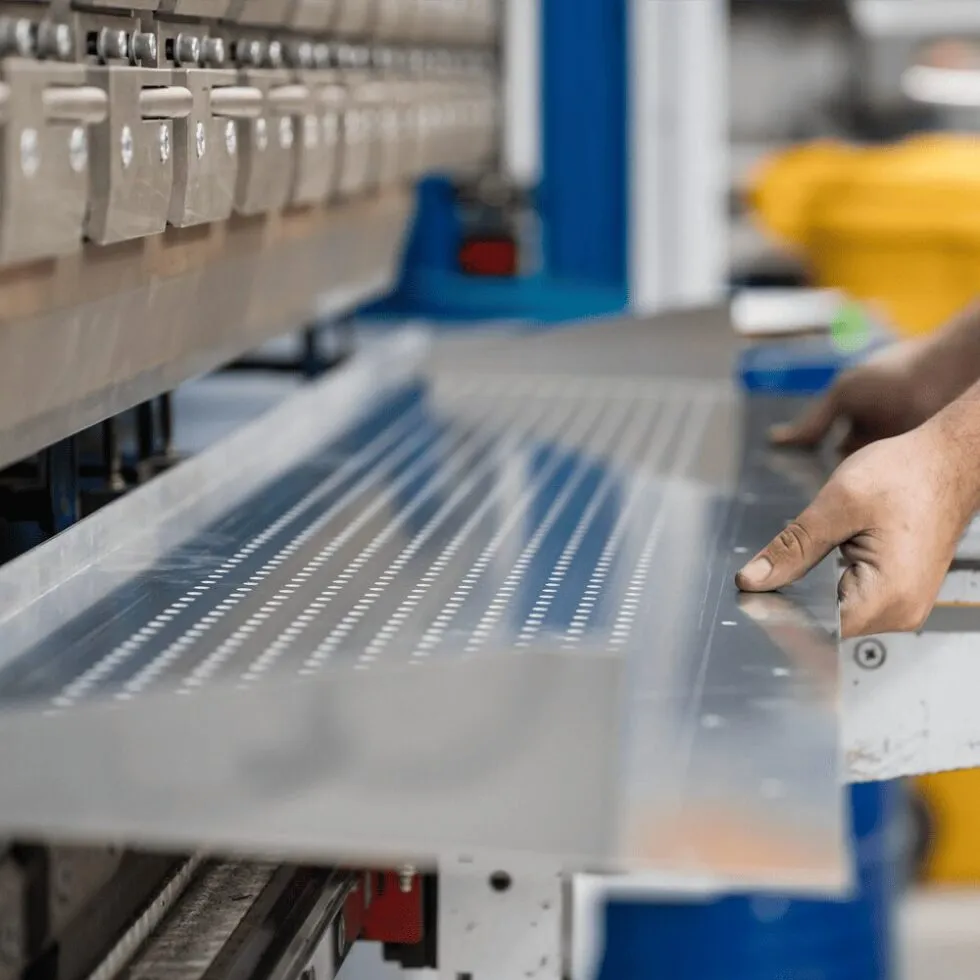
An aluminium perforated sheet earns its keep indoors wherever a surface needs to breathe without leaving an ugly gap in the joinery. That spans radiator covers, cabinet vents, speaker grilles, stair balustrade infill and room dividers.
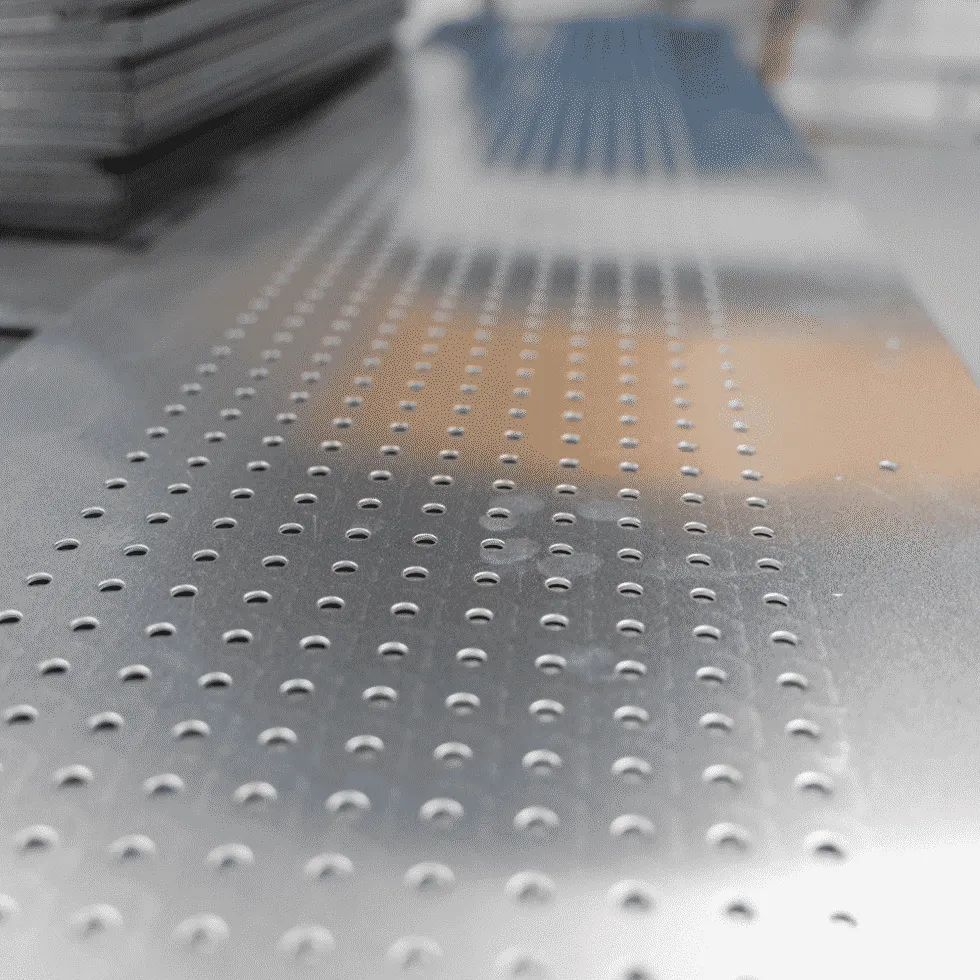
A perforated sheet is simply a flat aluminium plate punched with a repeating pattern of holes, from fine pinholes up to bold 20mm cutouts. The pattern lets air, light or sound pass through a surface that still reads as solid from across a room.
Where Perforated Aluminium Earns Its Place Indoors
Perforated aluminium panels show up most often where warm air, sound or light needs a way through without leaving bare metal on display.
- Radiator and heater covers that let warm air escape without exposing the element
- Cabinet vents on entertainment units, keeping consoles and set-top boxes from overheating
- Speaker grille inserts for flush-mounted wall or ceiling speakers
- Stair balustrade infill panels as an alternative to glass or timber slats
- Room divider screens that break up an open-plan living space without blocking light entirely
Getting to this point usually comes down to a few practical traits. Aluminium is light enough for one person to lift and fit most household-sized sheets. A natural oxide coating builds up on the surface and stops it tarnishing over time. It also cuts cleanly with a jigsaw, angle grinder or aviation snips, so no welding gear is needed for most jobs.
Balustrade infill carries an extra requirement the other uses on this list don’t. Any indoor barrier fitted to a stair or landing still has to meet standard fall-prevention rules. Those rules cover gap size and climbability, and they apply before the panel goes in. Radiator covers and room dividers carry no such requirement, so balustrade work is worth budgeting extra time for.
Getting the Open Area Right for the Job
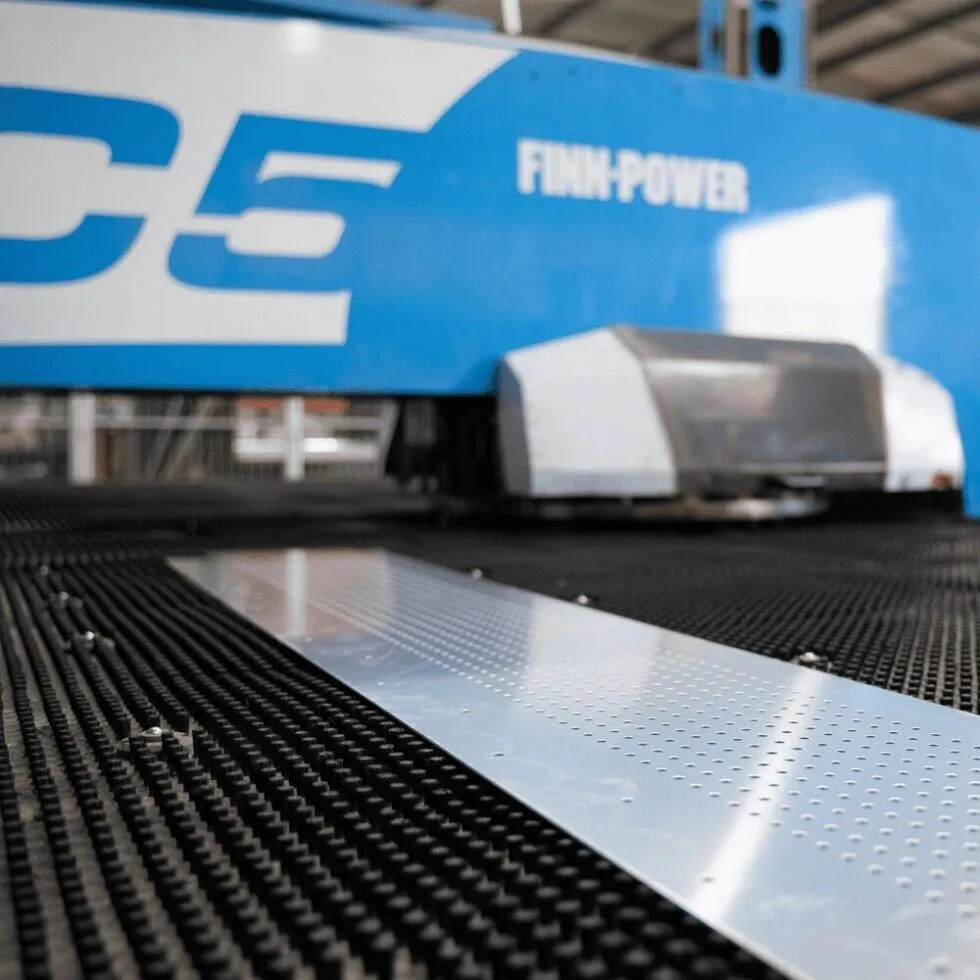
The right open area for an indoor panel depends on whether the job wants airflow, privacy or a splash of light through the pattern. A round hole sized around 5mm on an 8mm pitch typically lands near 30 percent open area, a fair middle ground for most fittings.
- Room dividers and semi-private screens usually sit close to that 30 percent mark, giving airflow without losing the screening effect
- Cabinet vents and general ventilation panels can run a touch higher, since airflow matters more than privacy behind a closed door
- Radiator covers and speaker grille inserts usually want the open end of the range, closer to 60 percent, so heat and sound pass through freely
Patterns approaching 60 percent open area let plenty of light and air move but leave next to no visual screening from a metre away. Anyone fitting a divider for genuine privacy is better off closer to that 30 percent mark instead.
Matching Thickness to the Fixture
Most indoor panels run somewhere between 0.8mm and 2mm, thinner overall than anything built for outdoor weather. There’s no wind load or driving rain working against the sheet indoors.
- Vent covers, cabinet inserts and anything fully supported on all four edges usually run 0.8mm to 1.2mm
- Freestanding screens and larger panels without a rigid surrounding frame need more body, typically 1.6mm to 2mm
- Balustrade infill sits between the two, closer to the thicker end when the surrounding frame is fairly open
Going thinner than the fixture needs is the shortcut that usually backfires. A panel that flexes under a light touch was picked on price, not on the span it has to cover.
The common line in the trade is that a well-supported panel forgives a lighter gauge, while a freestanding one rarely does.
Getting a Clean Fix and Finish Indoors
Fixing an aluminium perforated sheet indoors comes down to even support and the right fasteners. Indoor panels never face the corrosion pressure of anything left outside.
- Pilot holes sized just under the screw diameter stop the sheet distorting around fixings
- Rubber or nylon washers under the screw heads spread the load and stop dents forming
- A light file or deburring pass along cut edges matters most near hallways or kids’ rooms
- Bare mill finish holds up fine indoors, so powder coating is mostly a styling choice rather than a protective one
Frequently Asked Questions
Can Perforated Aluminium Panels Be Used Near Heat Sources Like Radiators?
Yes, aluminium handles heat well and won’t warp or discolour near a radiator the way some plastics and painted timber can. Heater covers generally want a fairly open pattern, up around 60 percent open area, so warm air escapes freely. A small air gap between the panel and the heat source is still good practice. Checking the panel doesn’t sit flush against the element is worth doing at install time too.
Do Indoor Perforated Panels Need Powder Coating or Anodising?
No, bare aluminium holds up fine indoors on its own, since a thin oxide layer forms naturally and stops it tarnishing. Powder coating and anodising mostly come down to matching a colour scheme rather than adding real protection. Anodising can also add a slightly harder surface where a fitting gets more day-to-day wear.
What Hole Size Works Best for a Room Divider Screen?
Hole patterns sitting around 30 percent open area usually strike the right balance for a room divider. They let light through without giving up the screening effect. Testing a sample panel from typical seating distance before ordering the full sheet is the easiest way to confirm it suits the room.
Final Thoughts
Indoor jobs give aluminium perforated panels more room to be decorative, since there’s no coastal corrosion to plan around indoors. Matching the open area and thickness to the specific fixture still matters more than whatever finish sits on top. A panel fitted with the basics right rarely needs a second look once it’s up on the wall.