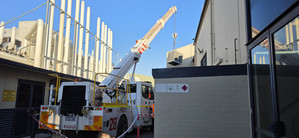
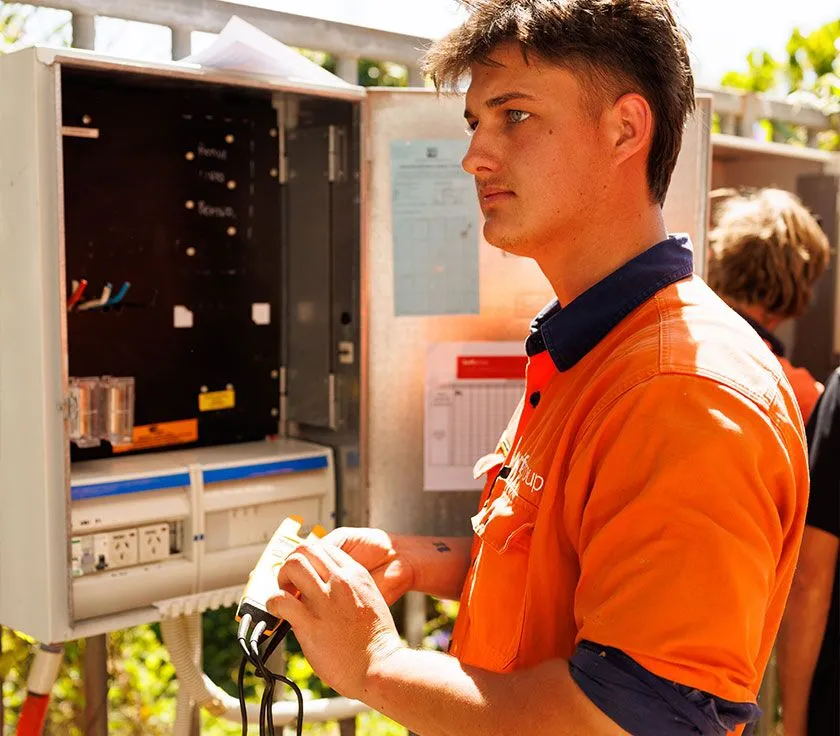
Health, aged care and education sites complicate Queensland electrical safety because they rarely shut down, and the people inside often can’t protect themselves. A hospital ward, a dementia wing and a Year 2 classroom all hold occupants who won’t spot a hazard or move away from one.
That changes how electrical work gets planned, isolated, tested and signed off.
How Patient Areas Change the Electrical Rules
Patient areas change the rules because AS/NZS 3003 requires them to be wired as body-protected or cardiac-protected electrical areas. Under the 2018 edition, any patient area not wired as cardiac-protected has to be wired as body-protected. Typical requirements include:
- Protection devices, either RCDs or an isolated supply with line isolation monitoring, selected at the planning stage
- Equipotential bonding in cardiac-protected areas
- Separate circuits serving each protected room or patient location, with signage identifying the area
- Routine inspection and testing, with records kept on the site’s compliance file
Body-protected areas cover patient areas where medical equipment contacts the patient’s body. Cardiac-protected areas cover procedures where equipment may connect directly to the heart, such as catheterisation. In those rooms, leakage currents far too small to feel can still trigger fibrillation.
The facility decides which rooms are patient areas, based on the procedures carried out in them. When a consult room becomes a minor procedures room, its electrical requirements change with it. That change can happen without anyone telling the electrical contractor.
A common hypothetical goes like this. A clinic adds two GPOs to a treatment room off the nearest general circuit during a fit-out. Six months later, the room is hosting procedures that bring it under body-protected wiring rules. The circuit gets redone, along with the paperwork, and the clinic pays twice.
Why Aged Care Sites Carry Their Own Electrical Risks
Aged care sites carry distinct electrical risks because residents bring their own appliances, and that gear often sits outside formal testing programs. Common examples include:
- Electric blankets and heat pads, often decades old with tired controllers
- Power boards daisy-chained behind wardrobes to run televisions, lamps and phone chargers
- Mobility scooter and wheelchair chargers left running overnight inside bedrooms
- Supply cords caught under the mechanisms of lift recliners and adjustable beds
That last item deserves more attention than it gets. Adjustable beds and lift chairs can crush their own cords, and the damage sits out of sight. Cords routed clear of bed mechanisms at setup are far less likely to cop that damage.
An electrical check at admission, before personal items reach the room, gives providers a record of what’s coming in. Under the Electrical Safety Act 2002, a business’s duty extends to everyone affected by its operations, and residents sit squarely inside that.
The 2018 edition of AS/NZS 3003 also added a clause dealing specifically with disability and aged care. The patient-area standard reaches well beyond hospitals and clinics.
Schools and the Holiday Shutdown Squeeze
Schools push most major electrical work into holiday breaks, which squeezes testing, defect rectification and certification into a few weeks. Contractors who’ve done enough school work plan around that pressure:
- Test early in the break so defects surface while there’s time to fix them.
- Order long-lead items, like switchboards and specialised RCBOs, before term ends.
- Check emergency stops and RCD protection in science labs and manual arts workshops first.
- Inspect GPOs in junior classrooms for cracked covers and loose fronts.
- Confirm site induction and child-safety screening requirements before workers arrive.
A defect found in the last week of the summer break can’t wait for the next one. Long lead times on switchboards turn that into a real problem.
Device charging trolleys deserve a look as well. Thirty laptops at around 65 watts each draw close to 2 kilowatts, or roughly 8.5 amps. A trolley on a circuit that also feeds other classroom outlets can push that circuit past its rating.
There’s no point throwing money at new devices without checking the circuits behind them.
Frequently Asked Questions
Can Electricians Work Live in a Queensland Hospital?
Yes, where one of four grounds in the Electrical Safety Regulation 2013 applies. The ground most relevant to hospitals covers live work that’s necessary in the interests of health and safety, such as keeping life-saving equipment running. The work still needs a risk assessment, a safe work method statement and, in most cases, a safety observer. Operational convenience doesn’t count.
Who’s Responsible for Residents’ Own Appliances in Aged Care?
The provider’s electrical safety duty extends to everyone affected by its operations, and that includes residents. An admission check and regular inspection of personal items help providers meet that duty. Residents and families should be told about the process upfront.
How Often Do Safety Switches Need Testing in Schools and Clinics?
It depends on the class of work in each area and whether the RCD is fixed or portable. Administration areas are usually office work, while classrooms and clinical spaces often fall into service work by default. Office work needs a push-button test every six months for fixed RCDs and every three months for portable ones. General service work sets six months for both, with an operating time test every two years in either class.
Key Takeaways
Health, aged care and education sites need more planning than standard commercial work because their occupants are vulnerable and their operations rarely pause. Sites that keep on top of Queensland electrical safety tend to share a few habits:
- They classify each area by its actual use and update it when rooms are repurposed.
- They treat live work as a narrow exception, with documentation for every job.
- They set testing intervals by class of work, handling cleaning and clinical equipment separately.
- They check resident-owned appliances at admission and during routine inspections.
- They plan school work around holiday breaks, with time left for defects.
- They update circuit schedules and records after every job.