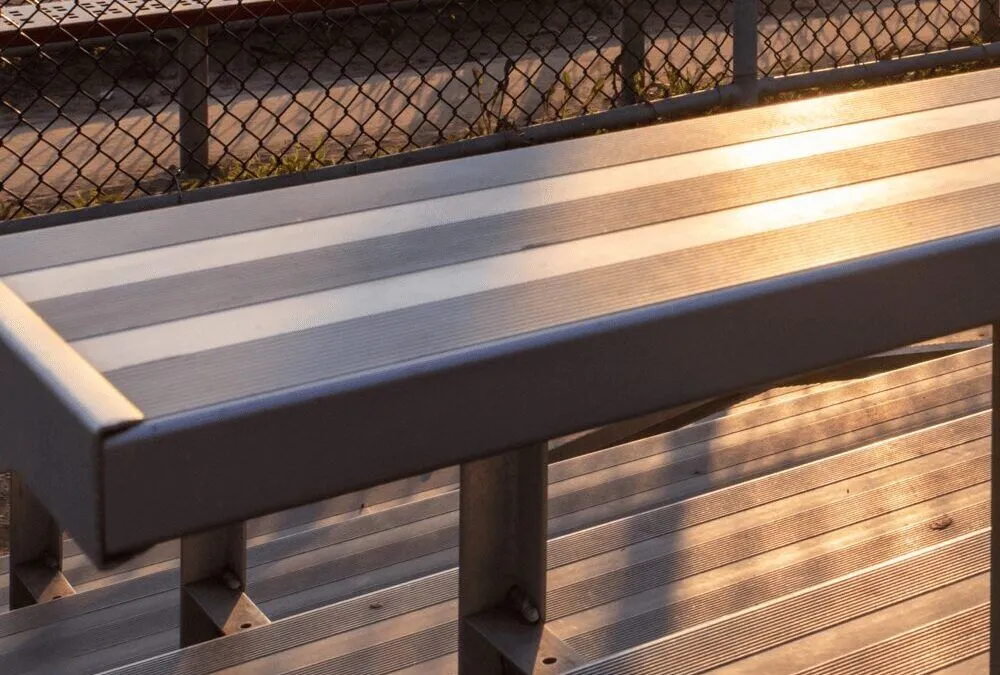
Commercial outdoor furniture cops a hammering from the harsh local climate. Operators urgently need baseline assets that hold the fort while the young business finds its feet. Aluminium bench seating provides the most reliable foundation for these exposed areas.
It’s incredibly stable and requires near-zero ongoing intervention from the maintenance crew.
How Initial Seating Choices Dictate Long-Term Maintenance Budgets
Initial seating choices dictate long-term maintenance budgets by permanently locking a venue into fixed cleaning and repair schedules.
- Trade contractors charge heavy hourly rates for sanding and re-oiling degraded hardwood planks.
- Fabricated steel units require constant inspections to catch early rust spots before they compromise the structural joints.
- Labour costs associated with moving heavy cast-iron furniture for daily courtyard washdowns add up rapidly.
- Metal extrusions completely bypass these recurring expenses because they don’t degrade under normal environmental exposure.
It’s an easy trap for new operators to fall into. They fall in love with a delicate timber aesthetic on opening day. Six months later, the maintenance department is bleeding money just to keep the splinters away. Hardwood requires constant attention to survive the punishing UV index.
Most site managers reckon there’s no point throwing money at materials that actively fight the environment. A quick hose-down before the morning service gets the job done for metal units. This operational efficiency is why trade professionals specify it as the default starting point. The financial spreadsheet looks much healthier when replacement cycles hit the fifteen-year mark.
How Modular Framing Simplifies Layout Changes for Expanding Venues
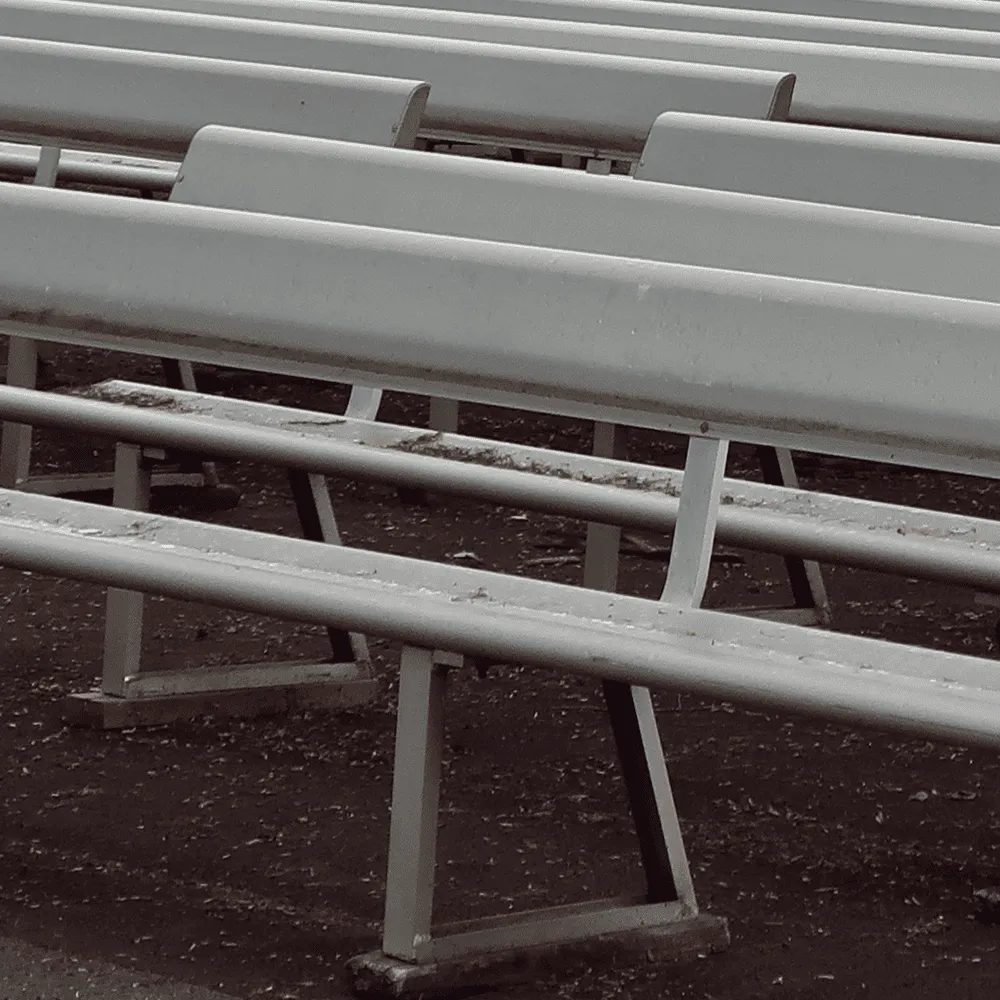
Modular framing simplifies layout changes by allowing operators to unbolt and easily relocate continuous seating lines as patron capacity grows.
- Straight runs of backless benches quickly define primary pedestrian walkways without requiring permanent structural walls.
- Corner modules link straight extrusions together to turn dead courtyard zones into highly profitable group seating areas.
- Freestanding skidded bases allow evening staff to pack down entire seating sections for large private events.
- The lightweight nature of the alloy means two staff members can safely shift a three-metre bench without mechanical lifting aids.
It’s a massive headache to map out spatial planning during the first year of trading. Venues rarely get the customer flow right on the first attempt. Starting with a modular metal system gives management the flexibility to adjust the floor plan. If a specific courtyard corner proves unpopular, staff can quickly unbolt the seats and move them elsewhere.
They aren’t stuck with heavy concrete blocks that require an excavator to move. The seating adapts directly as the business scales up its patron capacity. It prevents the visual chaos of dozens of loose chairs cluttering up the designated emergency exit paths. Maintaining strict egress routes keeps the local fire warden happy during unannounced inspections.
How Powder Coating Extends the Working Life of Exterior Assets
Powder coating extends the working life of exterior assets by baking a hardened plasticised barrier over the raw alloy to entirely block oxidation.
- Standard commercial applications lay down a minimum protective film thickness of 80 microns for general inland environments.
- Coastal sites demand specialised marine-grade powders applied at over 100 microns to stop airborne salt from pitting the metal.
- Heavy textured finishes excel in high-traffic zones because they easily mask daily scuffs from belts and heavy bags.
- Chemical-resistant topcoats allow cleaning teams to strip away aggressive graffiti tags using harsh industrial solvents without fading the base colour.
Standard wet paint simply flakes off after a few years in the sun. The electrostatic powder process bonds the colour directly to the metal substrate before curing in a high-temperature oven. It’s a highly functional application serving a protective role.
How Sustainable Sourcing Impacts Modern Commercial Procurement
Sustainable sourcing impacts modern commercial procurement by forcing developers to specify materials that contribute to high environmental site ratings.
- Extruded metal alloys are entirely recyclable at the end of their long commercial lifespan.
- The recycling process uses a mere five percent of the raw energy required to smelt new bauxite ore.
- Specifying long-lasting materials directly reduces the amount of broken commercial furniture sent to local landfills annually.
- Facilities gain valuable green compliance points when they document the use of closed-loop recyclable building materials.
Modern commercial projects face strict environmental oversight from local planning authorities. Builders need to prove they aren’t just filling sites with disposable, short-term assets. Specifying recyclable metal seating directly answers these regulatory demands.
Frequently Asked Questions
Can metal furniture withstand constant coastal salt exposure?
It performs exceptionally well near the ocean because the base alloy doesn’t rust like traditional carbon steel. Venue managers near the beach consider it the standard baseline material for exterior fit-outs. Adding a marine-grade powder coating provides an impenetrable barrier against corrosive salt spray.
How often should maintenance staff wash powder-coated frames?
A standard wash down with warm soapy water every three months keeps inland installations looking fresh. Coastal properties should increase this washing schedule to a monthly routine to stop abrasive salt accumulation. This basic maintenance preserves the integrity of the baked-on finish perfectly.
What makes structural alloy different from standard fabrication steel?
Aluminium alloys offer an incredibly high strength-to-weight ratio while remaining naturally resistant to environmental oxidation. Standard fabrication steel requires constant surface protection to prevent rust from eating through the welded joints. Metal extrusions also eliminate structural weak points because they form a single continuous shape.
Key Takeaways
Building a profitable commercial space requires locking in reliable baseline materials early in the planning process. Aluminium bench seating acts as the ideal starting point because it completely removes ongoing maintenance from the operational budget. It meets strict engineering compliance codes while handling harsh weather effortlessly.