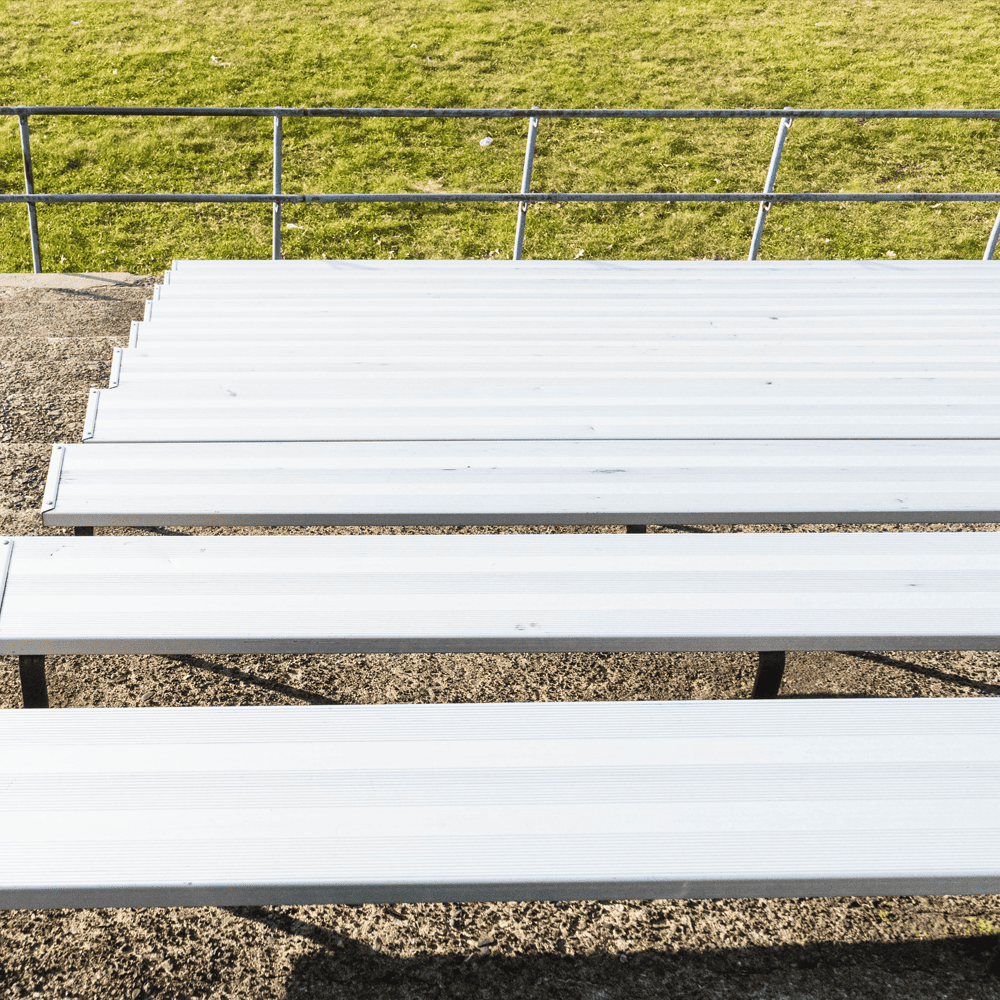
Powder coating is the finish most buyers picture when they order an aluminium outdoor bench seat in school colours or a council palette shade. How well it holds up depends on how it’s made and installed, then on how it’s looked after.
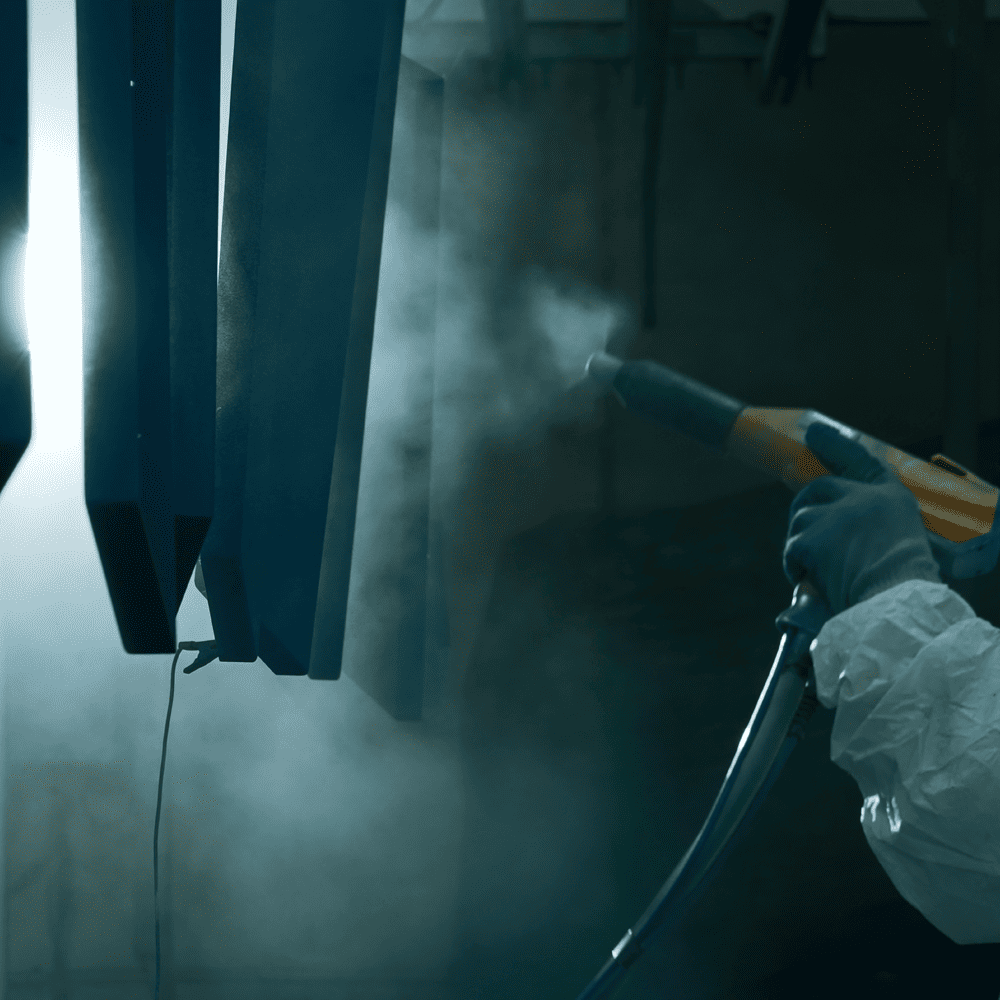
Powder coating is a dry finishing process. Fine particles of resin and pigment are sprayed onto earthed metal with an electrostatic charge. The part is then baked until the powder melts and cross-links into a continuous film.
What Powder Coating Actually Is on an Aluminium Bench
On an aluminium bench, the finished coating is a polymer skin around 60 to 80 microns thick that sits on top of the metal. It doesn’t alter the aluminium itself, so its performance depends on how well it’s bonded and cured.
Most architectural polyester powders cure at roughly 180 to 200°C metal temperature for 10 to 20 minutes. Thick leg extrusions take longer to reach temperature than thin seat slats. When a line runs to the slats’ timing, the legs can come out under-cured.
Under-cured powder has weaker adhesion and poorer resistance to solvents and cleaning chemicals. It can’t be picked by eye, which is why some coaters run a solvent rub test on a sample part.
Why Pretreatment Decides Most of the Outcome
Pretreatment decides most of a powder coat’s life because the film can only grip as well as the surface underneath allows. Bare aluminium carries a thin natural oxide layer, and that has to come off along with any extrusion oil.
- Cleaning to strip oils, cutting fluids and handling grease
- Etching or deoxidising to remove the natural oxide and expose fresh metal
- A chrome or chrome-free conversion coating that chemically anchors the powder to the aluminium
- Deionised water rinsing, so dissolved salts don’t end up trapped under the film
- Full drying before the powder booth, since trapped moisture blisters in the oven
Architectural powder coatings on aluminium are covered by AS 3715. Asking whether a coater works to it is a fair first filter when comparing quotes.
Any drilling or cutting done after coating bypasses all of this. That’s why fixing holes are best drilled before the frame goes through pretreatment.
How Powder Coat Behaves on Bench Frames, Welds and Edges
Powder coat doesn’t build evenly across a bench frame. It runs thinner on sharp edges and inside tight corners, and those thin spots are usually where wear shows first.
- Edge pull happens during curing, when molten powder draws back from sharp cut or punched edges. A small radius on slat edges gives the coating more to hold onto.
- The Faraday cage effect keeps charged powder out of tight recesses, so inside corners where legs meet the frame can come up light.
- Weld porosity can occasionally leave pinholes in the film, which let moisture through to the metal.
- Hanging points, where the bench hooked onto the conveyor, leave a small mark. Placed on the underside of a leg foot, it’s effectively invisible once installed.
A dry film thickness gauge shows these differences quickly. Readings taken on an edge and a flat face of the same slat often tell very different stories.
How Powder Coat Copes with Australian Heat and UV
Powder coat stays structurally sound in Australian heat. UV is the slower threat, gradually breaking down the resin surface, and the powder grade and colour largely decide how soon that shows.
- Superdurable polyester holds gloss and colour noticeably longer in full sun than standard polyester.
- Reds and dark shades usually fade first. Pale colours generally show UV wear less obviously.
- Dark finishes in direct summer sun can get hot enough to put people off sitting down.
- Matt and satin finishes hide fine scratches better than high gloss.
Aluminium also moves with temperature, at roughly 23 microns per metre per degree. A 3 metre seat swinging through 30°C grows about 2 mm. The coating handles that movement easily until a fixing binds it.
Over-tightened bolts crush and crack the film around the hole, giving moisture its first foothold. Tightening fixings to a set torque avoids that, and nylon isolating washers keep stainless fixings from touching the aluminium.
Frequently Asked Questions
How Long Does Powder Coat Last on an Aluminium Bench Seat?
Lifespan depends on fabrication and installation quality first, then on powder grade and how consistently the bench is washed. Coastal and poolside benches generally show wear sooner than sheltered inland ones. Warranty periods vary by brand and exposure zone, so the term quoted should match the actual site.
Can an Old Powder Coated Bench Be Recoated?
Yes, aluminium benches can be stripped and recoated. The old film comes off chemically or by blasting, then the frame goes back through full pretreatment before new powder goes on. Whether it’s worthwhile depends on the frame’s condition and how the quote compares with a new seat.
How Is Wood Look Powder Coat Applied?
A base colour is applied and cured first. A printed film is then wrapped around the part and heated, transferring the grain pattern into the coating. The result gives aluminium a timber look without the oiling real timber needs.
Final Thoughts
Powder coat performs well on an aluminium outdoor bench seat when every stage from coating line to cleaning roster is done properly. The result rests on four areas:
- Fabrication, covering pretreatment, cure and edge preparation
- Powder grade and colour, which set the pace of UV wear
- Installation, especially footings and fixings
- Washing, which keeps both the finish and the warranty intact
Damage-led failures usually start at footings and fixings, or along edges where the film runs thin. Fabrication and powder choices are cheapest to sort at the ordering stage, while installation and washing need an owner on site.