Chillers need the most planning because they’re usually a plant’s largest electrical load and the hardest item to replace in an occupied building. The switchboard and control system have to be planned around them, putting chillers at the centre of the mechanical electrical and controls scope.
What Makes a Chiller Different from Other Plant Items
A chiller is different because it combines a large motor load, a sealed refrigerant circuit and its own onboard controller in one machine. Those differences show up across every trade on the job.
- They’re typically the largest loads on the mechanical services switchboard (MSSB), and a bigger unit can push changes back to the main board.
- Lead times on larger water-cooled units can run to several months, so the order date tends to fix the rest of the program.
- Getting the old unit out and the new one in can mean a crane lift, a road closure or a plant room wall coming down.
- The onboard controller has to exchange data with the building’s control system, and that link rarely works straight out of the box.
- Refrigerant recovery needs technicians with an Australian Refrigeration Council licence, and the new installation has to meet AS/NZS 5149.
Service life adds another wrinkle. Chillers commonly stay in service for 20 years or more. By replacement time, the switchboard and control system around them may have been modified several times, often with patchy records.
Field crews regularly find as-built drawings that don’t match what’s actually in the board. A physical survey before design starts costs far less than finding the same problems during a shutdown.
The Switchboard Usually Sets the Program
The switchboard sets the program because everything in the plant takes its supply from it. Chiller circuits and protection have to be settled before cable sizing, routes or downstream controls can be finalised. If the board can’t take the new chiller, nothing else moves. Most of the risk sits in a handful of supply and layout checks.
- Whether the new unit’s full load current and maximum demand fit the incoming supply and the board’s rated capacity.
- Starter type, since swapping star-delta for a variable speed drive (VSD) reduces inrush current but introduces harmonics.
- Harmonic limits at the point of common coupling, set by the network operator, which can mean adding filters or specifying low-harmonic drives.
- Prospective fault levels and protection coordination, checked against the board’s AS/NZS 61439 ratings and the wiring rules in AS/NZS 3000.
- Cable routes that leave room for mechanical trades to pull tube bundles and service compressors.
On replacement jobs, the existing board was sized for equipment chosen decades ago. Later additions will have eaten into whatever spare capacity it had.
Cable routing gets overlooked more than it should. A tray run across the tube-pull end of a shell-and-tube chiller will have to be moved at the first major service.
Controls Integration Is Where Replacements Quietly Stall
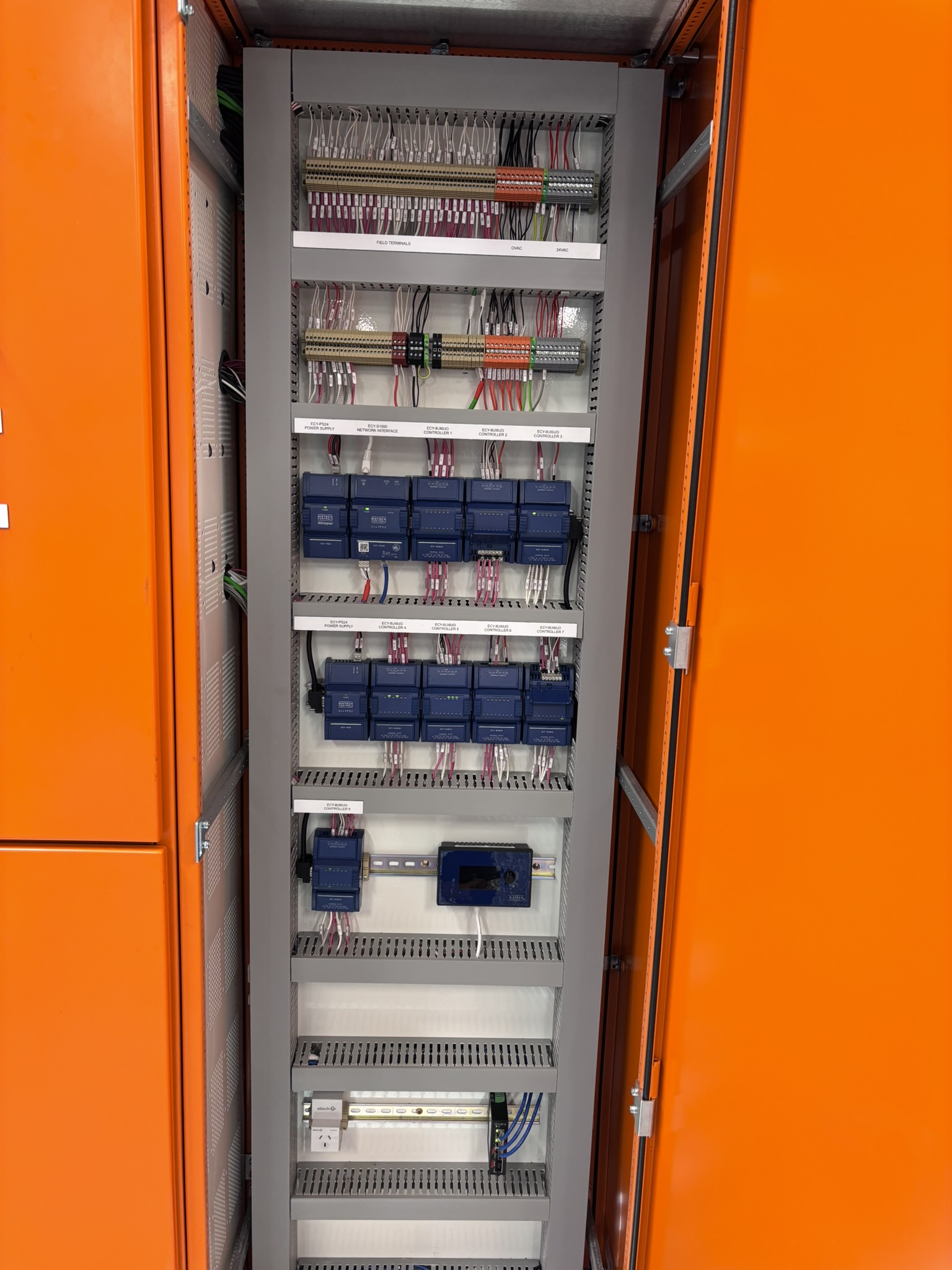
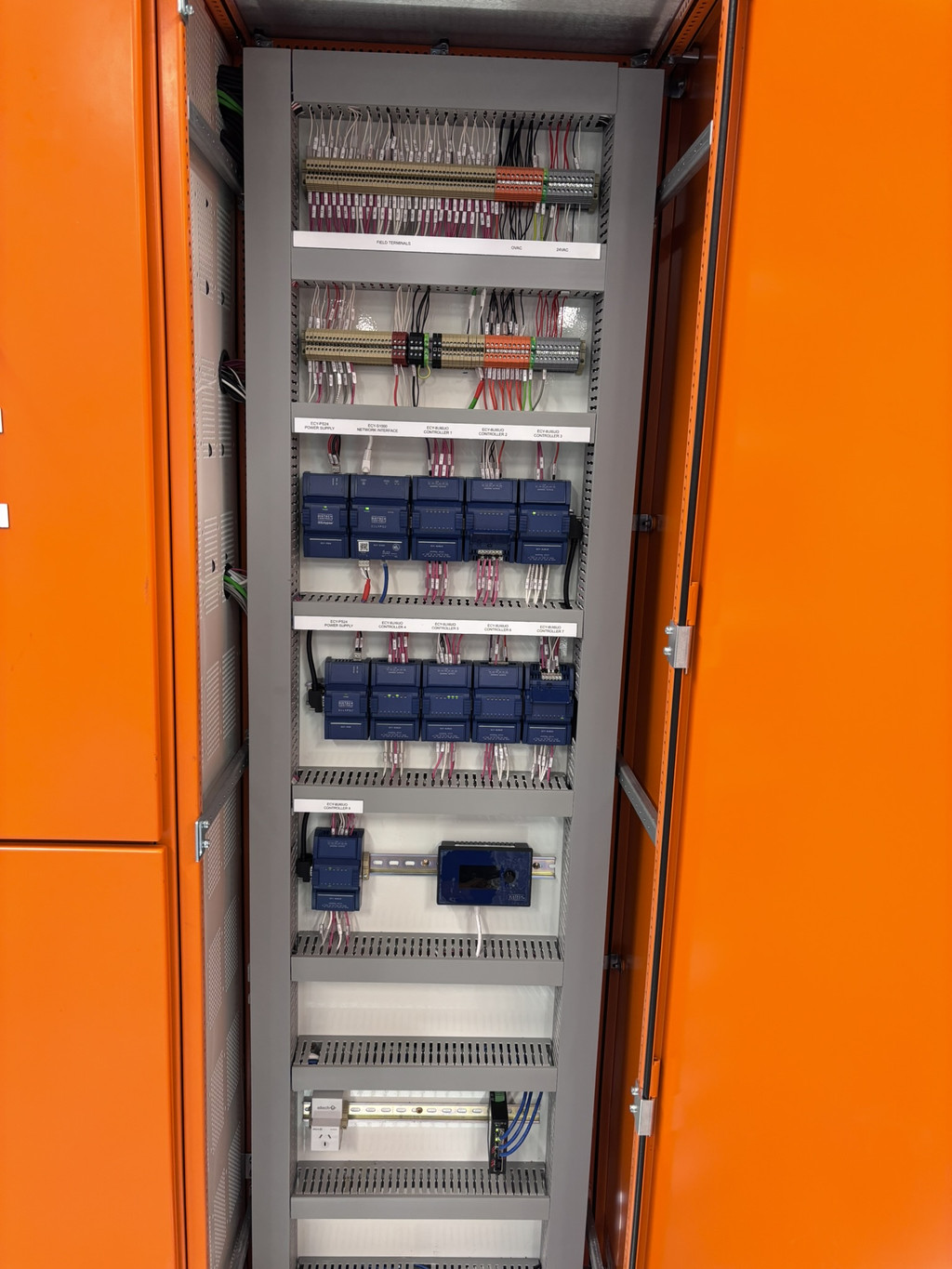
Controls integration stalls when a new chiller is expected to slot into the old sequence. The new machine’s controller, capacity steps and safety limits rarely match the unit it replaces, so the logic has to change with it. The same few traps turn up on job after job.
- Sequences written for fixed-speed machines get reused on variable speed or magnetic bearing units, which throws away a good share of the part-load benefit.
- The original equipment manufacturer (OEM) controller exposes plenty of points over BACnet or Modbus. Only a few tend to get mapped, so useful alarms never reach the operator.
- Minimum flow and low-load limits differ between old and new machines, which tends to show up as nuisance trips overnight.
- Hardwired safeties like flow switches, emergency stops and pump interlocks get missed because each trade assumes another has them.
DDC (direct digital control) is the controller hardware and logic that does the automated work inside a building management system (BMS). The BMS is the wider system, taking in the operator front end, trend logging and alarm handling.
On a chiller job, the DDC stages machines, resets chilled water setpoints and coordinates pumps and towers. The AHUs also have to respond properly, or the building can’t follow changing load.
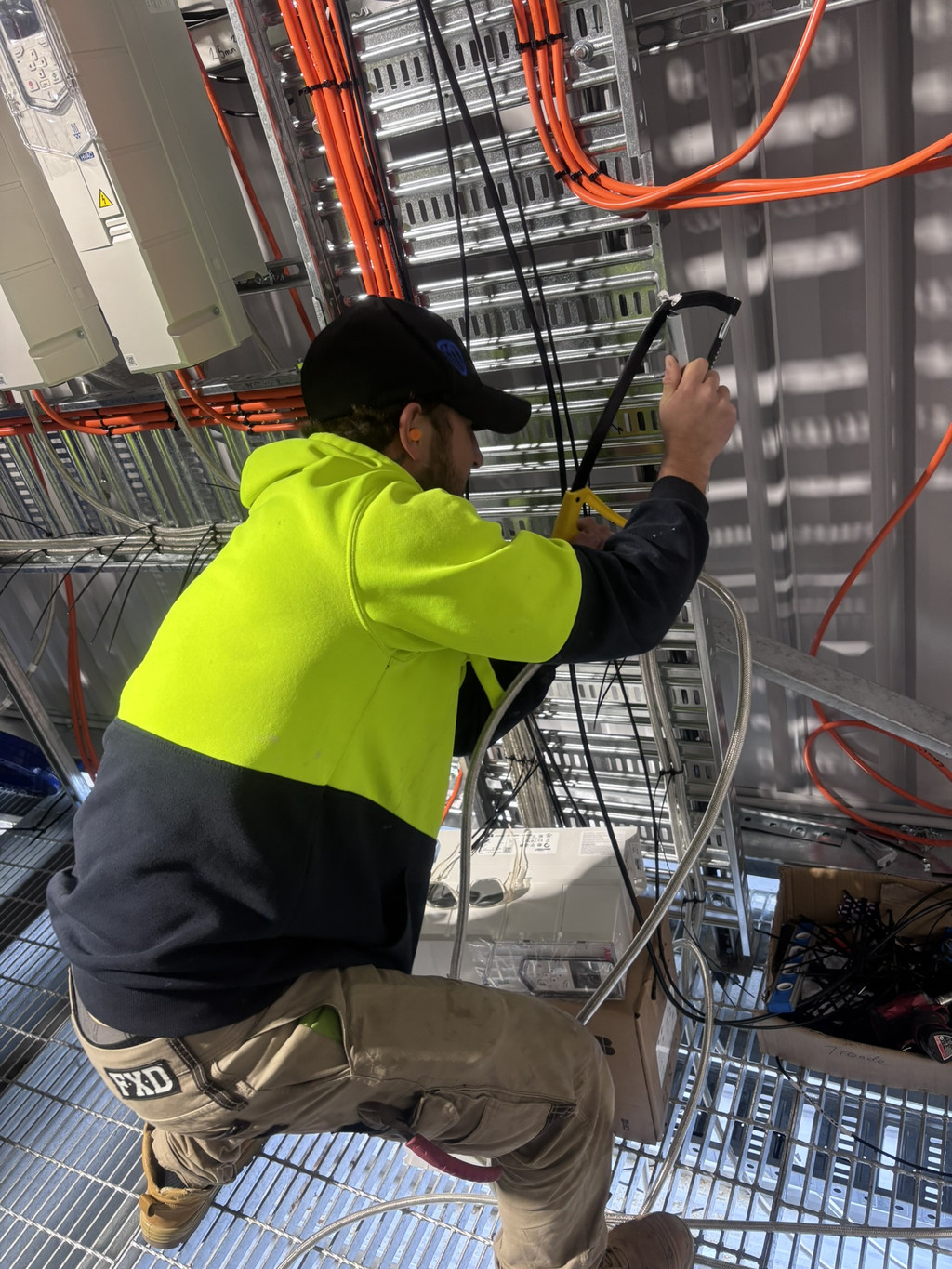
On most jobs, responsibility is split. The electrical contractor installs and terminates field wiring, and a controls specialist writes and commissions the programming. Handover points between the two scopes need agreeing early.
The common line in the trade is that chillers get bought on efficiency and then run on the old logic. NABERS (National Australian Built Environment Rating System) ratings use 12 months of data, so the shortfall tends to show up at the next rating.
Frequently Asked Questions
How Long Does a Commercial Chiller Replacement Take?
It often takes several months from decision to handover, and longer for larger plant. Equipment lead times account for much of that. The physical swap and commissioning can take a few weeks once the unit’s on site.
Does a Chiller Replacement Need a Switchboard Upgrade?
It depends on how much the new unit differs from the old one. A change in capacity, starter type or drive technology can push an existing board past its rating or harmonic limits. Checking this before the order’s placed avoids an expensive surprise at delivery.
Can the Existing BMS Control a New Chiller?
In most cases it can, provided the BMS supports the chiller’s communication protocol and has spare capacity. The sequences will still need rewriting to suit the new machine. Older systems sometimes need a controller or gateway upgrade to talk to modern OEM controllers.
Key Takeaways
Chiller replacements carry more planning risk than any other plant swap, because the switchboard and control system both hinge on one machine. That machine also has to be replaced in a building that can’t stop running. Treating the mechanical electrical and controls scope as one coordinated package keeps these jobs on program.