AS 1319 is the Australian Standard that sets the colours, shapes and symbols occupational safety signs must use. It first appeared in 1952 as AS C24 and went through several revisions since. The current edition dates to 1994, and it was reconfirmed as current in 2018. Safety sign compliance in Australia runs through this one document more than most businesses realise.
What AS 1319 Actually Covers
AS 1319 is a design and layout standard. It doesn’t create a legal duty on its own. It sets out what a compliant sign should look like once a hazard assessment flags the need for one.
The standard splits signage into four groups, and each one carries its own colour and shape rules:
- Regulatory signs cover prohibition (red circle, black symbol) and mandatory actions (blue circle, white symbol), such as a hard-hat rule at the entrance.
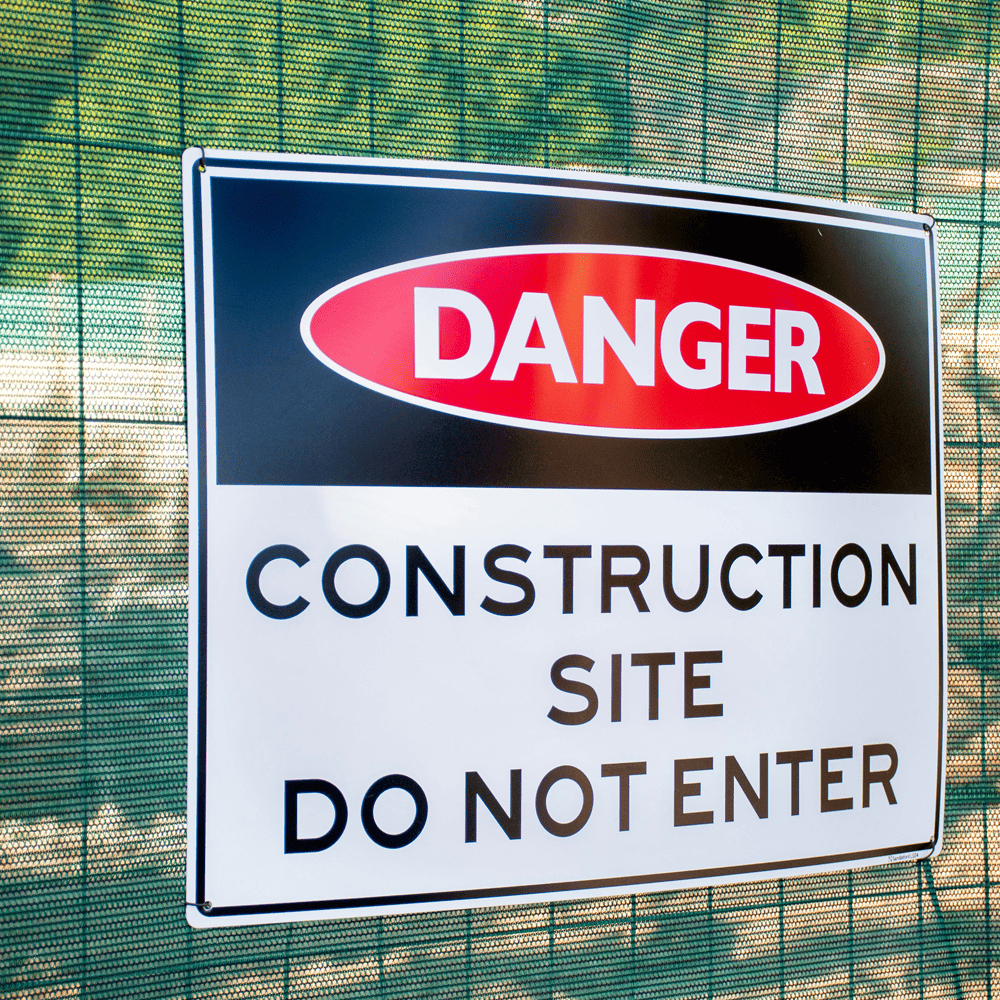
- Hazard signs split into warning and danger. Warning uses black on yellow, in a triangle, for risks that aren’t life-threatening. Danger uses red, black and white for anything more severe.
- Emergency information signs use green and white layouts to mark first aid points, assembly areas and safety equipment.
- Fire signs use red backgrounds with white symbols or text, covering extinguishers, hose reels and alarms.
One detail trips businesses up. AS 1319 doesn’t cover internally illuminated exit signs inside buildings. Those sit under a separate standard, AS 2293.1.
A business ordering a full signage package for a new fitout sometimes assumes one standard covers the lot. It can end up with an exit sign that passes one audit and fails the other.
Why AS 1319 Matters for Safety Sign Compliance Nationally
AS 1319 gets treated as the default design reference right across Australia. That holds regardless of which WHS legislation a business sits under. Most states and territories run on the harmonised model WHS laws that came out of the 2008 national review. Victoria is the outlier here.
It never adopted the model laws. Victoria still runs its own Occupational Health and Safety Act 2004. Even so, AS 1319 still functions as the practical design reference businesses lean on there too.
That’s a fairly unusual position for a document to hold. AS 1319 predates the harmonised WHS framework by close to two decades. It’s still doing the heavy lifting on sign design nearly ten years after its last reconfirmation. Regulators, insurers and principal contractors all tend to point back to the same standard when a signage question comes up.
Safety sign compliance, in practical terms, means the signage on site matches the hazard it’s there for. It also has to match the colour and shape rules AS 1319 sets for that category. Miss either half, and the sign isn’t doing much beyond decorating a wall.
Common Ways Businesses Get AS 1319 Wrong
Most compliance gaps come from a mismatch: the wrong colour, category or wording for the hazard on hand. It’s rarely a sign that’s missing outright.
A few patterns show up again and again on site walk-throughs:
- Ordering generic caution signage from a hardware catalogue instead of stock built to the correct AS 1319 category and colour scheme.
- Mixing up “regulatory signs” as a supplier label. Some sign companies use that term for road and traffic signage as well as workplace signage. An order can turn up as roadside stock instead of the workplace sign that was needed.
- Leaving signage in place after a layout change, so a fire extinguisher sign points at equipment that moved months ago.
- Mounting signs too high, too low, or behind stacked stock, which fails the “clearly visible” test most regulators apply on inspection.
There’s a less obvious failure mode worth flagging too. UV exposure and cheap materials fade colour over time. A faded sign can drift out of its own category without anyone noticing.
A yellow warning sign left in direct sun for a couple of years can bleach toward a pale cream. That no longer reads as yellow at a glance. A red danger sign can fade toward pink just as easily. The sign is still there, but a faded colour no longer matches the category AS 1319 assigned it.
Frequently Asked Questions
Is AS 1319 a Legal Requirement or a Guideline?
AS 1319 isn’t legislation. It’s a design standard that other laws and codes point to. It becomes a practical requirement once WHS laws or codes of practice reference it. It also applies once a risk assessment identifies a hazard that needs a sign.
Does AS 1319 Apply in Every Australian State?
Yes, in practice, even though WHS legislation itself isn’t fully uniform. Most states and territories run on harmonised model WHS laws, while Victoria retains its own Occupational Health and Safety Act 2004. AS 1319 still operates as the common design reference across all of them.
How Often Should Businesses Review Their AS 1319 Signage?
There’s no fixed interval set out in the standard itself. Most sites benefit from a signage check every time the floor plan or hazard profile changes, plus a general visual check every year or so. Outdoor signage exposed to UV and weather needs closer attention, since fading can shift a sign out of its category before it looks obviously worn.
Final Thoughts
Safety sign compliance under AS 1319 comes down to matching the right category, colour and shape to an actual hazard. It also means keeping that match current as the site changes around it.
The standard itself hasn’t changed much since 1994. Site layouts, materials and business needs keep shifting anyway.
None of this needs a big budget to sort out. It mostly needs someone walking the site with a fresh set of eyes. Do that often enough, and it catches a faded sign or a mismatched category before an inspector does.